Thank you! Your submission has been received!
Oops! Something went wrong while submitting the form.



This is the fifth edition of Beyond the Byline, a column written by Indiegraf’s Entrepreneur in Residence for AI Laura E. Davis. It focuses on highly actionable, no-nonsense strategies to help your newsroom stand out and thrive in an era of AI slop and eroding audience trust. Each strategy is for every newsroom—regardless of your level of AI adoption.
If your newsroom has a newsletter, you probably already understand its importance: It’s one of the best ways to build a direct relationship with your audience away from the algorithms. This was true long before the rise of generative AI, but with the increased concern about declining search traffic in the AI era, it’s important not to just have a newsletter but to use it as an avenue for building trust and connection with your audience.
Quality of the information or the people—that’s what I want you to think about anytime you are producing a newsletter. AI is moving us from an “attention economy” to a “trust economy,” in the words of Eli Pariser, author of “The Filter Bubble.” People understand that AI has increased the amount of misinformation and slop on the internet—and they’re understandably concerned about it. While that might be bad news overall, I see a silver lining for local independent newsrooms in the shift from the attention economy to the trust economy: Where the attention economy rewarded scale, the trust economy rewards credibility and relationships. Your newsletter is one of the best places to build both.
To demonstrate what I mean, I’m going to share a few examples from around the Indiegraf network.
Make sure your newsletter is from a person in your newsroom. When I signed up for the San Diego Sun’s newsletter, I immediately got an email from Ron, who signed off the welcome note like this:
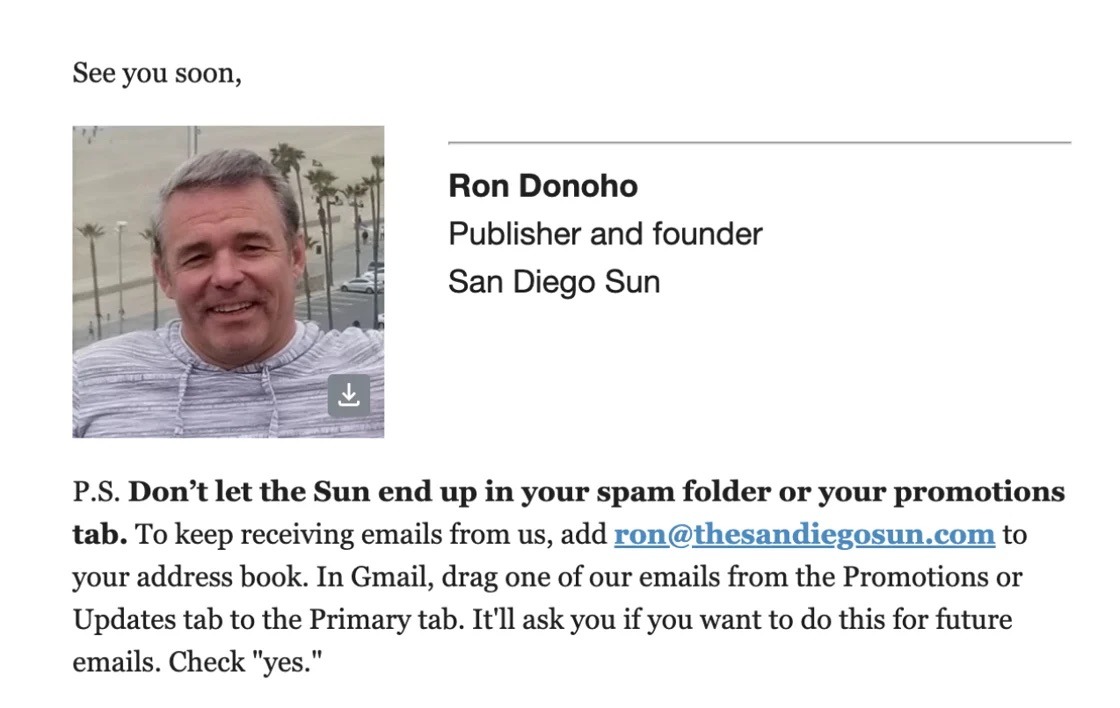
I love that he includes a photo, has his personal email as the contact and gives direct advice to help subscribers keep his emails in their inboxes. In today’s world, people trust people more than brands, and right away, Ron builds a connection with his readers that leaves them more likely to open the next email.
👉 Indie Email how-to: You can trigger a note like this one in Indie Email by creating an automated welcome email—check out this video walkthrough for step-by-step instructions.
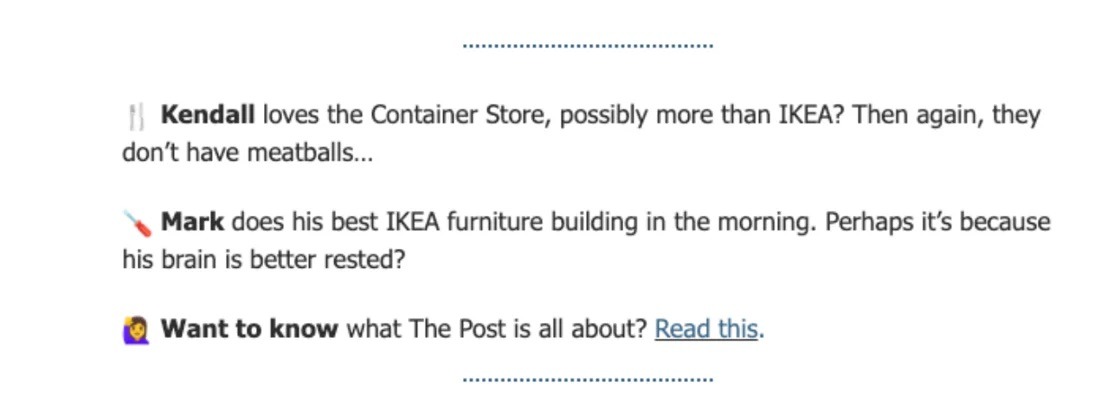
Making that personal connection doesn’t stop with the welcome email. The Palm Springs Post has built a profitable news organization partly by combining AI-assisted reporting and personal touches in its daily email. From sharing personal experiences to song suggestions, Mark Talkington and Kendall Balchan start their digests with a quick paragraph like this:
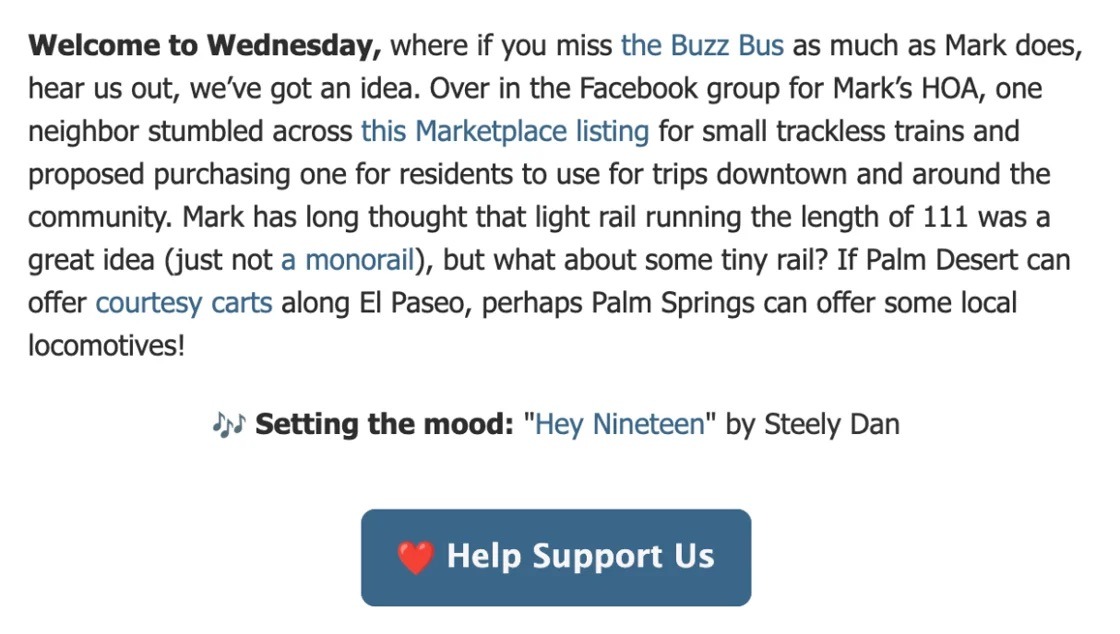
And they close with a note like this one:
I have a lot more to say about newsletters, so this is just the first part of a two-part Beyond the Byline series. Today we covered the people part of your newsletter. Stay tuned for the next column, where I'll focus on the information you're providing in your newsletter to make it a destination—and a source of revenue.

Indiegraf is the operating system for independent local media.