Thank you! Your submission has been received!
Oops! Something went wrong while submitting the form.



This is the sixth edition of Beyond the Byline, a column written by Indiegraf’s Entrepreneur in Residence for AI Laura E. Davis. It focuses on highly actionable, no-nonsense strategies to help your newsroom stand out and thrive in an era of AI slop and eroding audience trust. Each strategy is for every newsroom—regardless of your level of AI adoption.
In my last column, I wrote about email in the trust economy and the importance of showcasing the people writing your newsletter. Today we’re moving on to part two: making your newsletter a destination for your subscribers, not just another item to be skimmed in their inboxes.
These days, you need to consider AI as an additional layer between you and your readers. It’s not just that your email might get relegated to the Promotions tab in Gmail. It might be that your human subscribers deploy AI agents to read their emails, or the tech companies do this themselves as inbox features continue to evolve. So the human eyes land on an AI summary, rather than on your email. There are a couple of ways to help yourself stand out, and one of them is to use human connection to delight your readers in some way that keeps them coming directly to you.
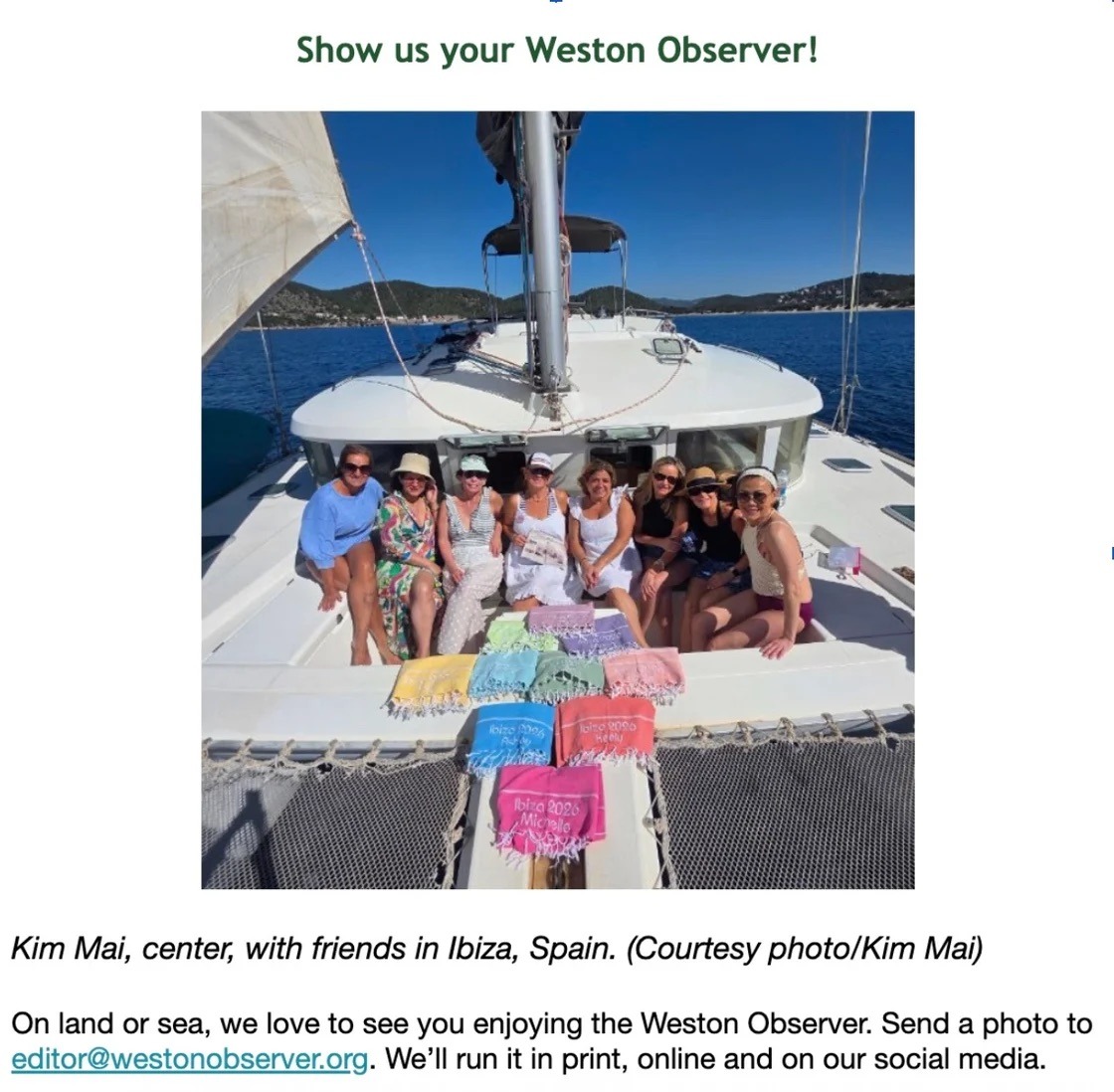
You can do this with your writing: My favorite newsletters are the ones that contain everything I need to know in the body of the email; they’re more than just a list of links. This is the default for many newsletters nowadays, so if you’re already doing that, great! You can level up by adding a simple feature in your newsletter that people look forward to. The Weston Observer opens every email with a note written by Managing Editor Melissa Russell and closes with this section:
And yes, an AI-summarized email that properly cites your links can still generate traffic to your site, but remember that one of the best ways for local news organizations to build sustainability by retaining subscribers is to build a habit, according to research from the Medill Local News Initiative. Publishing a newsletter that people look forward to every day or every week is a great way to do that.
👉 Your newsletter can be a source of revenue: Making your newsletter a destination isn’t just a nice-to-have. It can be a revenue-generator in and of itself, and Indie Email is here to help. Indie Ads Manager can serve ads to your newsletter, and you can also integrate Stripe with Indie Email. Get instructions here for integrating Indie Email and Indie Ads Manager, and go here for the Stripe integration instructions.
This one is more general advice and not just newsletter advice, so keep it in mind for everything you’re doing: AI can easily collect and summarize information that’s already out there, so focus on giving people information they can’t find anywhere else. Instead of sending links to stories, use the body of your email to share your original reporting, analysis, restaurant reviews, etc. Don’t just tell people what happened; tell them why it matters. People can look to AI for general information, which means they’ll be looking to trusted journalists for more sense-making and taste-making. Use your reporting, human judgment and experience to provide that valuable content.
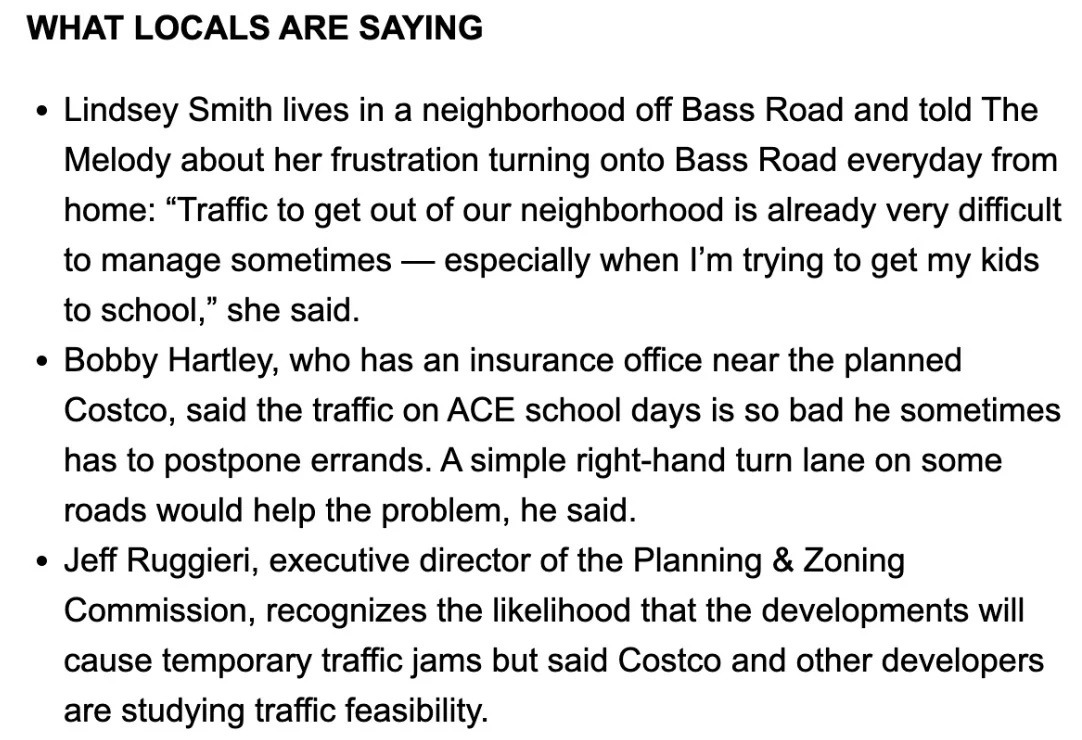
I love how The Macon Melody did this recently with a story about—wait for it—traffic. Providing valuable information doesn’t have to be only about big investigations or analysis. It’s about helping people in your community make sense of the information they’re getting. Here’s how The Melody did that in its daily newsletter after news broke of a new Costco coming to the area:
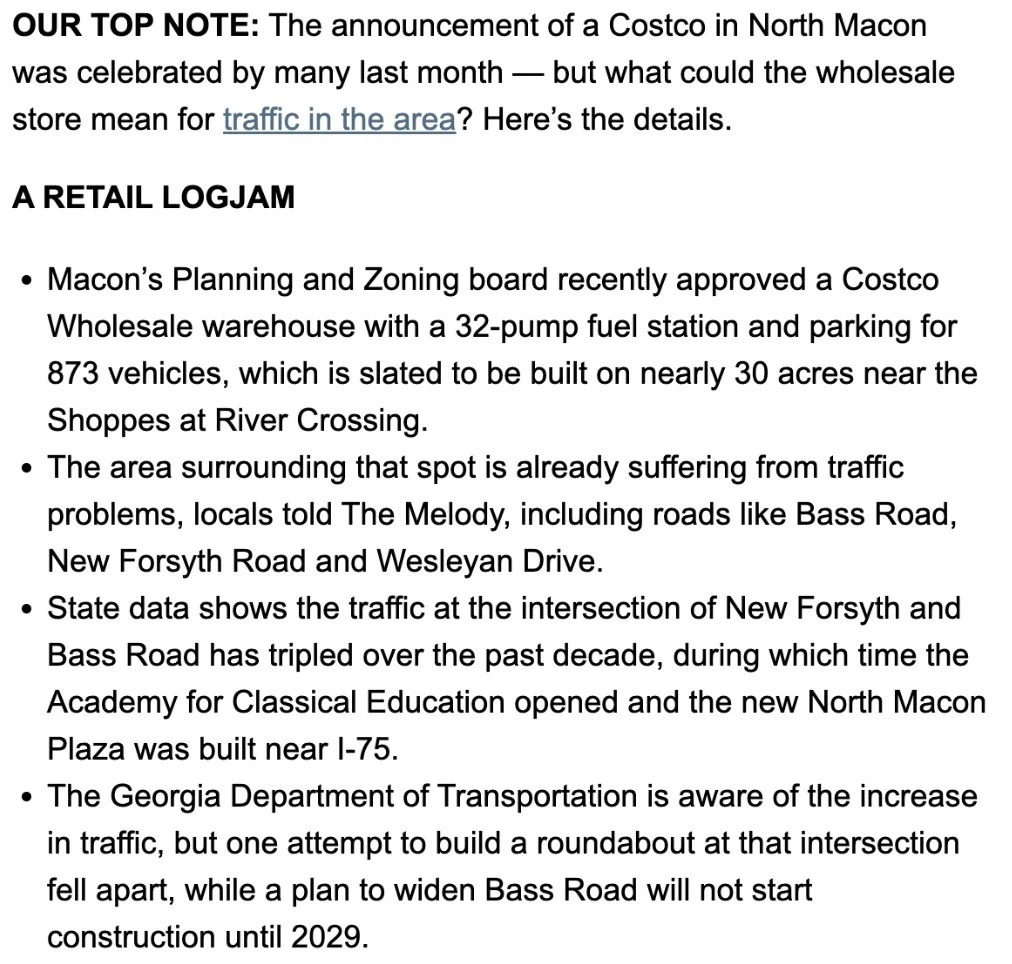
The bullet points give people a quick and easy way to digest the context, and Macon Melody translates the overview into real-world context with quotes from their reporting:

Indiegraf is the operating system for independent local media.