

Thank you! Your submission has been received!
Oops! Something went wrong while submitting the form.



As online publishers venture into digital advertising sales, it’s useful to consider creating a media kit to help attract potential advertisers or sponsors. Media kits are essential to provide targeted advertising partners with the information they need to make informed decisions about working with a publication.
You might follow up on an initial sales call by sending a media kit over to the advertising partner for review. Potential advertisers or sponsors may want to review a summary of your publication and available opportunities before they’re ready to hop on a call. In either case, having a media kit ready will be important to a sales strategy. In addition, a media kit provides your publication with several key benefits, such as:
They are a great way to introduce a prospect to your publication. It’s also a tool that can help build trust with your advertising partners because it acts as an asset that transparently shares relevant information while also remaining consistent across your sales communications. This will give advertisers peace of mind that they’re being treated equally.
The use of a well-prepared media kit template communicates to your potential advertisers that you’re a serious organization. A media kit that features your branding will play a key role in communicating a cohesive and strategic vision to your partners.
They give key decision-makers access to all of the information needed to make a decision about working with your publication. This shortens the amount of time you need to spend providing information to prospects, and in turn, helps them reach their decision to make a purchase sooner.

La Esquina TX's 'Sponsor Us' page, where they provide their media kit to potential advertisers along with an automated form.
There are several key components of a media kit that potential advertisers will expect. But what is the cost of designing a media kit? Truthfully, you don’t need a big budget to design an effective media kit, so long as the key information below is organized and communicated:
You may be interested in:
📚”How to make effective ads that readers actually respond to”
📚”Navigating sponsored content: A guide for newsrooms and publishers”
📚“Ad revenue essentials for newsrooms and independent publishers”
A media kit is a simple package that publishers share with advertisers to showcase their value, advertising options, and—most importantly—their rates. However, publishers don’t need to wait for a flawless media kit to start selling ads.
Ramona Wildeman, Indiegraf’s Partnerships Manager, encourages publishers not to hold off on selling ads just because their media kit isn’t picture-perfect. All you need is a clear, compelling pitch about what your publication brings to the table, some basic audience demographics, and a snapshot of your performance—like open rates or click-through traffic—for the ads running on your website or newsletter. Start with what you have, and the rest can come together as you go!
“If you’ve got 5,000 subscribers, that’s 5,000 people — you don’t need to have something fancy. All you need is a compelling statement about what you have to offer as a publication, any audience demographics, and the basics of your open rate or click-through traffic for wherever your ads are running on your website or newsletter,” says Wildeman.
One way to make your media kit stand out is to construct it with customized portions that you can tailor for your intended ad partner. For example, a media kit with a cover letter addressing your targeted prospect directly and a brief summary of why you think an advertising partnership will be successful can help you stand out from the crowd.
In addition, thinking about the sections of your kit as modular to meet your specific prospect’s needs is a good rule of thumb if you are trying to leave a strong impression. For example, instead of including all of your audience demographics, you may want to develop several options for the various segments of your audience and include only the one most relevant to your prospect.
By thinking through other potential bespoke approaches to each section such as case studies, you can ensure your media kit tells a story tailored to your prospect, which is far more likely to stick with them.
If you’re creating your first media kit, consider being transparent about how you introduce your advertising products and approach. For example, communicating to your early prospects that you’re just getting started is a good tactic. Or you could consider offering free or discounted ad placements to sweeten the deal for partners on their first ad.
"Advertisements can be easier money. Selling advertisements might feel icky, weird and/or hard when you first start. Some startup newsrooms have sworn it off entirely. In my experience, advertising can often be easier money than reader revenue. It takes quite a long time for readers to trust a publication enough to donate," says Sam Hoisington, Indiegraf’s Publisher Partnerships Manager.
WATCH ON DEMAND: HOW TO GET STARTED SELLING YOUR FIRST ADS
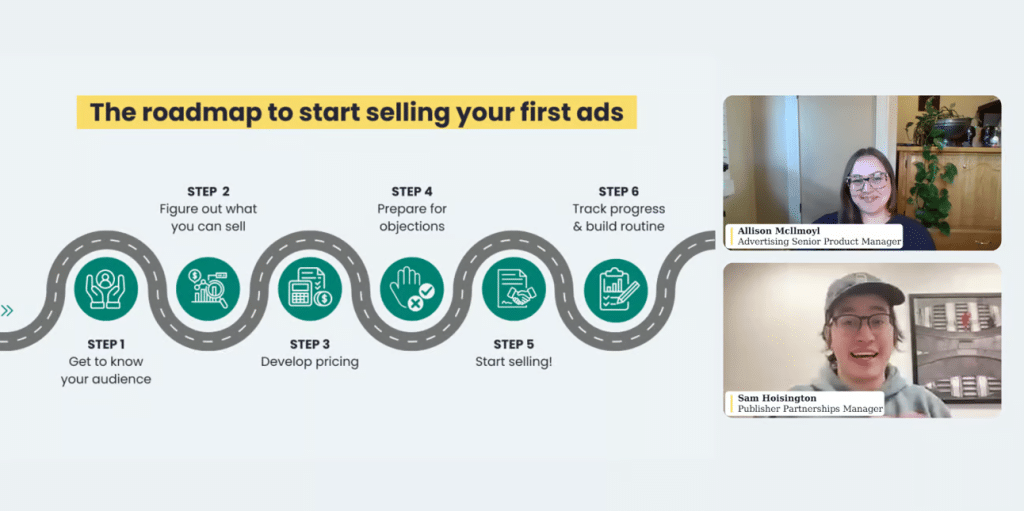
Media kits remain highly relevant in ad and sponsorship sales today. The proliferation of automated ad sales has only made that more true. By selling direct advertising, you are not simply selling exposure to your audience but you are proposing a long-standing relationship between you and your prospective partners. Clear, transparent, and easy-to-access information is foundational to any business relationship — and a media kit can help build this.
📌 Your media kit plays a key role in ad sales—see how it fits into a complete ad strategy in our website and newsletter ads guide.

Indiegraf is the operating system for independent local media.