
Thank you! Your submission has been received!
Oops! Something went wrong while submitting the form.



At The Discourse, we used to be weary of swag (stuff we all get). We’re a small team and didn’t want to get into the retail business. But having followed the ever-successful Black Friday membership drive from our friends at The Narwhal, centered on their signature red toques, we decided to give company swag a try last year.
With The Narwhal’s permission, we copied the Black Friday campaign. In a matter of days, we reached our fundraising goal. Wanting to share some of The Narwhal’s knowledge, I caught up with editor-in-chief Emma Gilchrist to find out what other indie outlets need to know to run their own stellar swag-driven fundraising campaign.
Each type of swag item (custom branded merchandising) tells a story. Fun garments like toques and T-shirts with logos or slogans can boost brand visibility. If a person wears a toque every day, Emma explains, they’re engaging with The Narwhal daily.
Each new hire at The Narwhal is photographed outdoors wearing company swag that resembles something from a lifestyle brand, which Emma laughingly describes as “ProPublica Patagonia.” But awareness advertising isn’t the primary goal of The Narwhal’s famous toques. “I kind of see that as gravy on top of it,” says Emma. The core objective is to drive new members to sign up. (More on that later).
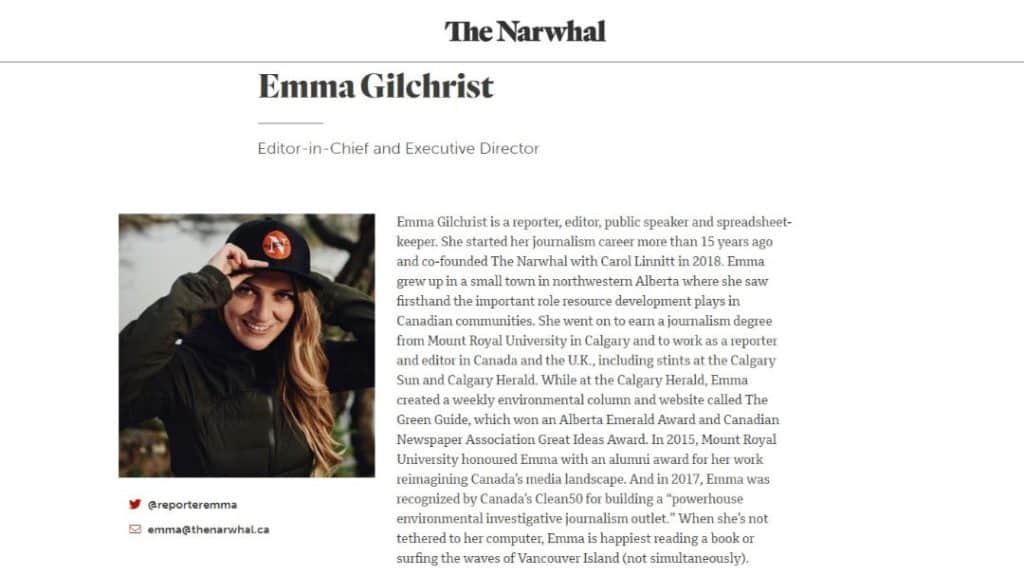
Emma Gilchrist from The Narwhal wearing company swag
The Narwhal produces a yearly print edition featuring its top visual stories. The campaign around this piece of company swag is cleverly timed to coincide with journalism award nominations, which are often featured in the magazine. In this way, the print edition serves to celebrate the best stories of the year.
Custom branded swag like this centers on what The Narwhal is all about: high-quality investigative journalism you can’t find anywhere else.
As a community-driven local news outlet, The Discourse decided to center its values by commissioning a local artist to design our tote. We then shared the story of Qwiyahwult-hw (Stuart Pagaduan)’s design with readers. Similarly, IndigiNews shared the story of Lauren Marchand’s art featured on its stickers, titled “coyote goes viral,” where senk’lip (coyote) is shown sitting in front of a computer sipping mountain medicine tea.
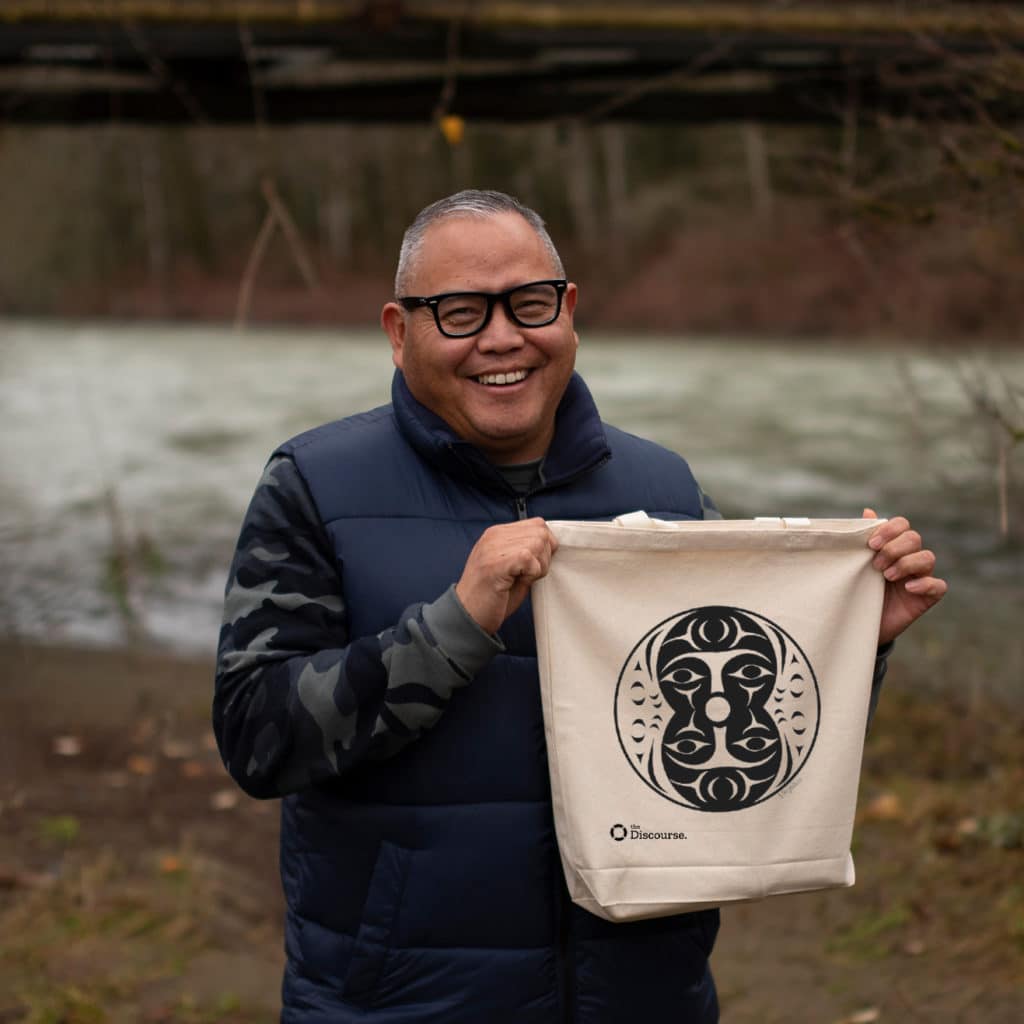
Stuart Pagaduan’s design shows two figures that share one mouth, surrounded by two protective eagle spirits. Photo by Philip McLachlan/The Discourse
Once you’ve chosen your swag items and put production in motion, it’s time to build a campaign around it. As you know from reading this newsletter, every good campaign involves a sense of urgency. That can look like a deadline or a scarcity of the swag itself.
“Become a monthly member by midnight tonight, and we’ll send you a sweet Narwhal toque,” The Narwhal’s campaign email reads. This works because it’s only offered for a limited period, which encourages people who might be on the fence about giving to go ahead and fill out the form.
“We all know how many emails we get, how many things we might want to do on the internet,” Emma says. “But what makes you actually complete an action on any given day? A deadline.”
The Narwhal also uses custom branded swag as a premium to upsell people, Emma explains. During most of the year, supporters have to pay a premium amount to get a Narwhal toque, boosting the average donation. “A certain percentage of people really want the swag, so they’ll want to make sure to give $20 a month to get it.”
You can also use your swag for special contests, like Instagram giveaways that encourage people to follow your account or sign up for your newsletter. It’s an easy prize that circles back to the value of your brand.

Operationally, you’ll need to make sure you have a way to gather people’s mailing addresses when they sign up to become supporters. This can be done with the support of the team at Indiegraf. A possible workaround is to follow up by asking people for their addresses via email, but that’s a pain for both parties.
Also, T-shirts and other clothing items are fun, but consider the fact that you’ll need to gather sizing information. If it’s not inclusive of a wide range of sizes, consider what this communicates to readers. A tote bag, especially on the thinner side, stickers, or a thin toque will be the cheapest to mail. Anything that you can’t fit into a mail slot will be more expensive. Be wary of heavy items like books or bulky items like sweatshirts.

Indiegraf's custom branded sticker being used at DemocracyXchange
Something like a print edition magazine is nice and easy to fulfill. Just keep in mind that shipping costs have to be factored into your return on investment.
Lastly, don’t underestimate the amount of work it will take to package and label orders, and consider the impacts of a long delay before eager readers get their custom branded swag. To speed things up and make the process less agonizing, consider locking in a day for a team mailing party, Emma advises.
Like many outlets, The Narwhal team has gone back and forth about opening an online store, says Emma. They’ve decided to go for it, but it will only be available to members. That way, people still need to be part of a club to get their hands on it, Emma explains, and the relationship with readers doesn’t become too transactional.
“I think some people might be allured by the idea that they can maybe make a little bit of money off of selling swag—but you’re not going to make very much,” Emma warns, especially once you factor in your full costs including the time it takes to build the campaign, fulfill orders, etc.
“For us, the swag is more valuable in driving membership and engagement.”
Here are some of our favorite pieces of swag, from the network and beyond:

Indiegraf is the operating system for independent local media.