
Thank you! Your submission has been received!
Oops! Something went wrong while submitting the form.

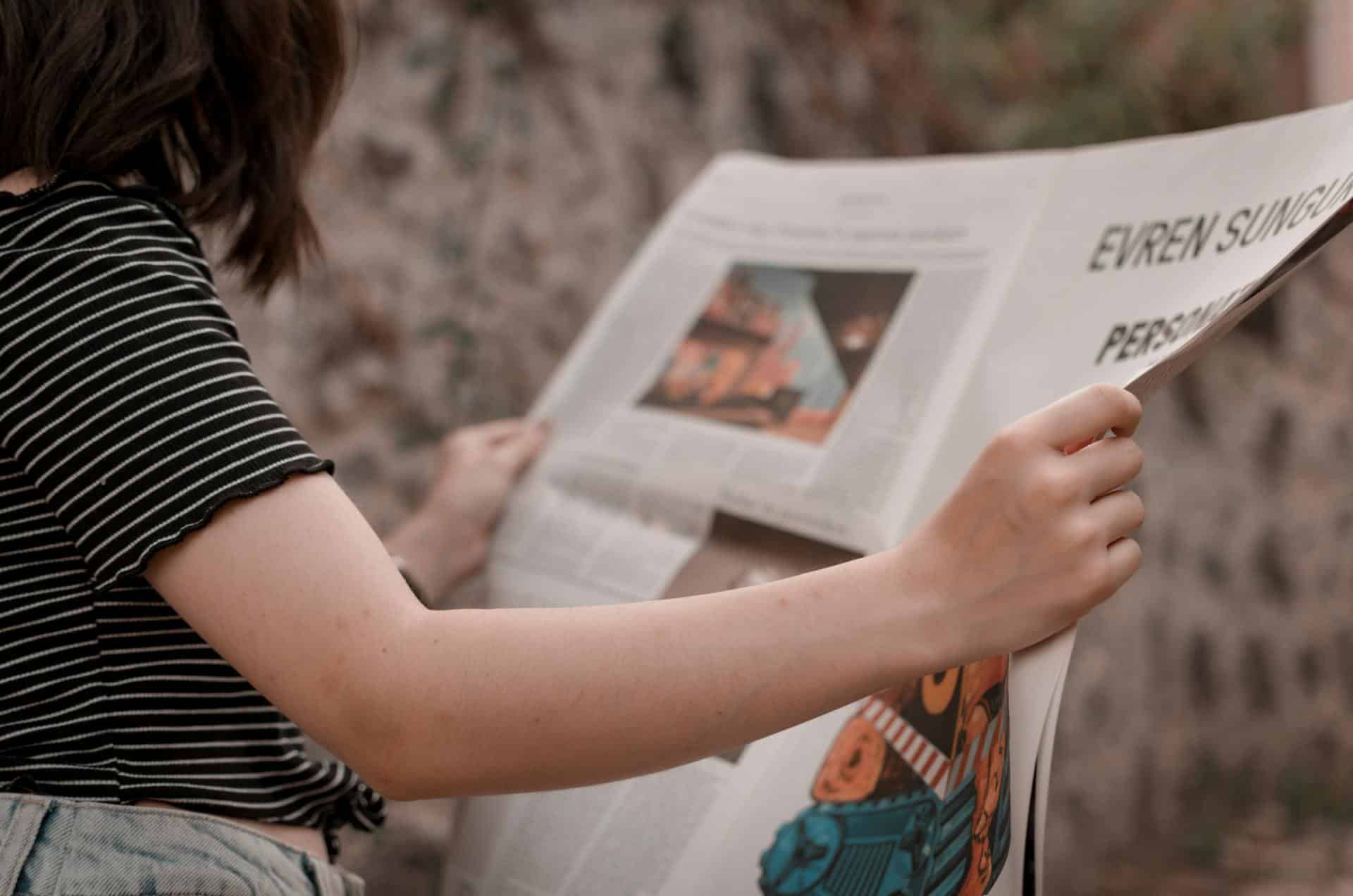


Every three months, Dana James jumps in a big van, picks up about 8,000 copies of the Black Iowa Newspaper, and delivers them, alongside her husband, across the state.
Since launching last year, it’s the only paper telling community stories about Black Iowans, and the reception speaks for itself. On one recent delivery trip, just as self-doubt started to creep in, James recalls stopping at a Black church. “Number one, they were shocked that there was a Black paper. And then they were like, ‘You brought this here, that means something to us.’”
“The one lady—I will never forget—she took the paper and kind of clutched it to her chest. By the time we got done, we were all kind of teared up.”

One of Dana James’ favorite stories is a profile of foster grandparent Grandma Annie, a community story that would never have been told without Black Iowa News. (Source: Screengrab from Black Iowa News)
Like most states, Iowa has lost a lot of news outlets including the longest-running Black newspaper, which closed in 2015. So while Dana was thinking of online digital news when she launched Black Iowa News in 2020, first on Substack and then on Indiegraf, she began to consider the opportunity in print.
“It seems counterintuitive to start a newspaper in that environment, but once I started really studying the models that were there, it just makes sense that my community could really benefit from a newspaper,” she says.
Publishers Erika Fredrickson and Matt Frank launched The Pulp through Indiegraf six months ago in the ashes of Missoula’s free alt-weekly, The Missoula Independent, which shuttered in 2018.
As former contributors to what was the city’s only alternative news source, the dream of kick-starting a print newspaper is very much alive.
“The message is like, it's all digital now and you've got to get over it,” Fredrickson says. “We're getting such good feedback on The Pulp right now, and the one thing that kills me is just hearing people say, ‘When are you going to do print?’”
All ideas are on the table as they scheme up ways to create a sustainable print product. Anecdotally, the demand is edging toward “desperation,” Fredrickson says.
Both young and old community members want to see local stories in local cafes and record shops. “[People] are wanting something different than just a sort of endless digital universe.”
While James runs the Black Iowa News almost entirely on her own, she draws from the expertise of colleagues. She started considering the feasibility and logistics of a newspaper—from distribution to the recommended 60/40 ratio of news to advertising—over many conversations with experts in print. “And before I knew it, I was like, 'I'm going to start a newspaper.’ It was the most exciting thing ever.”
“Once I said that out into the air, I had to do it.”
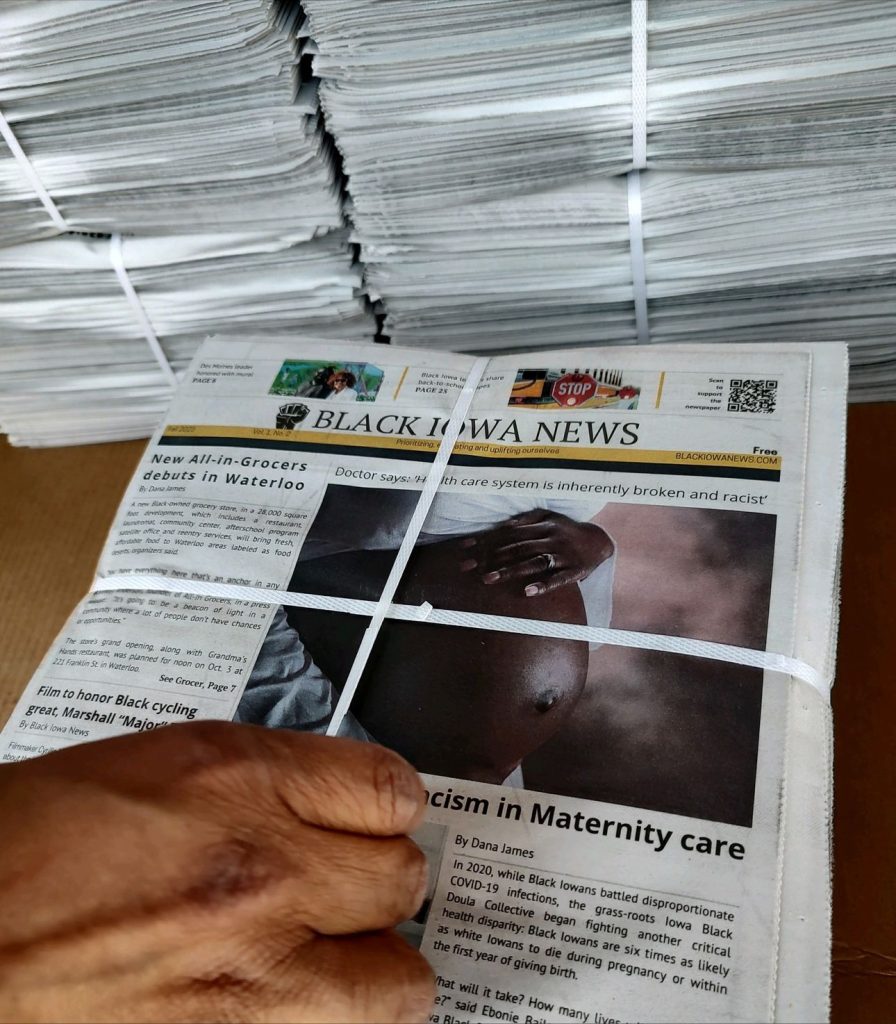
“There's just something about having that newspaper in your hands,” publisher Dana James explains. “The stories stay with us, the information stays with us.” (Source: Dana James on LinkedIn)
When it comes to the business model, James understands that to be successful and sustainable, she has to be prepared to pivot and try a mix of revenue streams from sponsorship to subscribers.
“I don't even think nationally, the journalism community has honestly figured out how to help small publishers like myself keep going, because we can clearly see that the subscriber model—that's not going to do it.”
For now, she reluctantly spends a fair bit of time applying for grants. She’s focused on getting bigger business sponsors to fund the paper. “Our whole state benefits from having people that are more informed,” she says. “I will do my best to keep it going. But it's definitely something that the community has to take ownership of as well.”
The Pulp too has been picking the brains of experts, both within and outside of journalism. “Journalists have been taught for so long to just barely be making it,” she says. “[We’re] just trying to think more in a tech startup way of like… doing something where you're actually finding some kind of revenue stream that maybe isn't from the readers.”
For example, is there a way to support a newspaper through legacy gifting or endowment? “There is money out there that people aren't sure what to do with,” she says. “Right now is the time that people feel excited about journalism, so it feels like the right time to ask.”
Among the ideas The Pulp is considering is charging local businesses to carry the paper in their stores. “Businesses are excited about that idea of being exclusive,” she explains. “So it would bring people into their businesses… and [align] what they believe in as far as local news goes.”
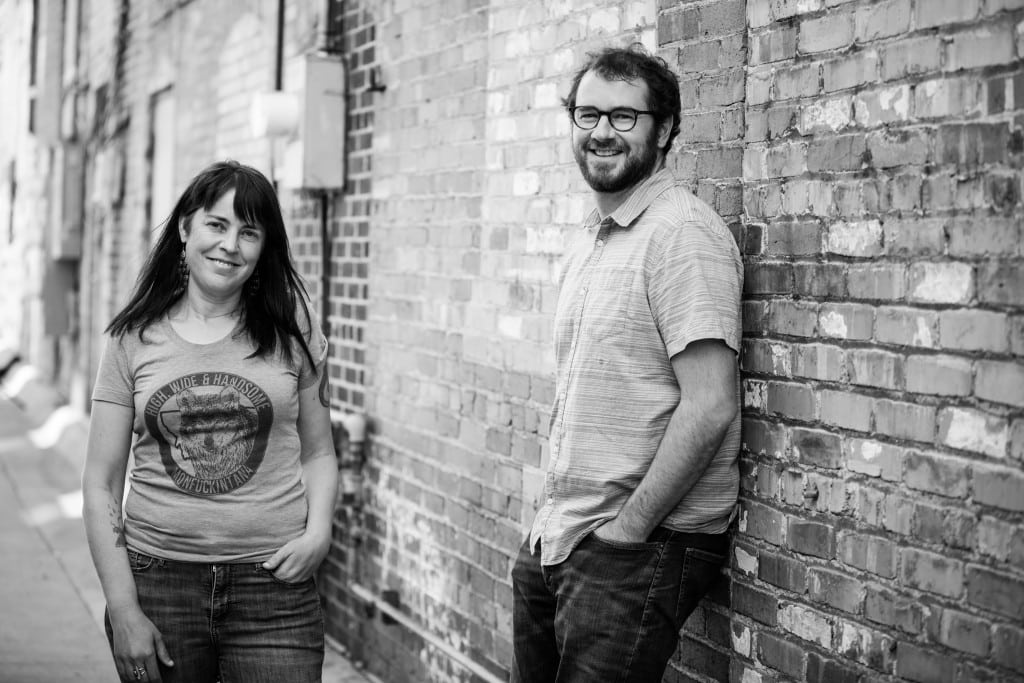
The Pulp publishers Erika Fredrickson and Matt Frank. (Source: The Pulp)
Beyond the cost of design and distribution, a major expense is printing. Since James started the paper last year, the price has gone up at least 15 per cent, she explains.
It’s the same expense that’s driven The Pulp to consider another out-of-the-box idea. “Matt and I are editorial people, we're not business people. So we ask a lot of wild questions,” she says, adding that maybe stupid questions are what’s needed in a time of innovation.
“We don't have to stick to the same thing we've always done,” she says. “So we've been like, ‘Should we just buy a printer?’” While it would take a long time to pay back the cost of acquiring a machine, they could bring in clients as one of the only independently owned printers in the state.
Mindful of the cost of bringing an alt-weekly back to life, David Gray-Donald of Toronto’s The Grind Magazine was careful to not overpromise. “When we initially launched The Grind as a print-first publication in 2022, we didn't know if we could pull it off, so we didn't say much in advance,” he explains.
They were able to raise about $30,000 through crowdfunding and their networks to cover the cost of the first issue, building momentum around the revival of a progressive politics and culture magazine.
But producing a paper every other month and distributing it for free to more than 300 spots along regional public transit is expensive, and the non profit is still far from where it needs to be. “We continue to fundraise to be able to cover basic costs, but we still have no permanent staff, and every issue might be our last.”
Taking the money she receives from subscribers to heart, the Black Iowa Newspaper is produced as lean as possible. “I take that super seriously… that people believe in what I'm doing,” James says. So instead of hiring a designer, she taught herself to do the layout. What used to take weeks now takes one.
“God bless Canva,” she says with a laugh.
She spends extra time creating strong visuals and prints in color to bring out the community elements of the storytelling.
“Even though we're spread apart geographically—there's only about 131,000 Black people in Iowa,” James explains. “I want this newspaper not only to really look great… I want it to linger in the home.”
She gets more letters to the editor now than she does with the online newsletter, she says. “People see this as their paper. And that is just the coolest thing ever.”
Through responses to a call out on LinkedIn, she has volunteers who help with deliveries. “That's people believing in this paper.”
The Pulp too is thinking about visuals first, with more illustration, images, and maybe even comics, so it’s something “you wouldn't want to throw away.”
They’ve entertained the idea of printing a one-off product to see how it’s received, similar to Fredrickson’s zine called the Garden City Beast, which she created for a brief time after losing her job at The Missoula Independent.
“Even if it's a pretty low-tech product, just kind of a fun thing to pick up and read—maybe we can do something like that,” she says. “There are people that don't know about us, and they're not going to discover us until we're on the table in some coffee shop.”
The Grind’s advice to other publishers thinking about print? “If I had to do it again, I would have fundraised a lot more before launching, like over $100,000, and would have lined up more advertisers,” says Gray-Donald.
For a print-first publication, this involves getting people to back the vision before it’s a reality, which comes with challenges. Growing a base of paying subscribers is their next step toward sustainability, though this adds to the expense when you consider the need for subscription management systems.
For James, it’s a passion for community service largely propelling the delivery van. “I don't want to ever let anybody think, 'Well, this is so easy and this is a great business model and this is gonna work forever’,” she cautions.
Publishing stories, delivering a newsletter, a podcast and now a newspaper—the risk of burnout is very real. But so far, “knowing the void that it's filling in my community is just so worthwhile,” says James.
“I have said to myself from day one that if I only produced one paper, I would view that as the biggest accomplishment of all time,” she says. “I'm not really worried about its longevity. I'm worried about what's the next great paper I can put out.”

Indiegraf is the operating system for independent local media.