

Thank you! Your submission has been received!
Oops! Something went wrong while submitting the form.



Sponsorships can be a game-changer for your publication. They provide a reliable revenue stream while giving sponsors a platform to achieve their goals. But how do you tap into this potential and create sponsorship opportunities that resonate? Let’s break it down in this guide to leveling up ad revenue.
Your sponsors are looking to achieve specific goals, and your job is to help them meet those objectives through well-defined sponsorship opportunities. Here are a few examples of how you can add value for your sponsors:
By advertising with your publication, sponsors also demonstrate their commitment to independent journalism and their local community.
Having clearly differentiated products is critical. Sponsors should instantly understand what you’re offering and the associated costs. For example, when pitching newsletter ads, clearly explain the ad placement, format, and visibility. A transparent and detailed ad management strategy can make all the difference.
The bulk of your sponsorship sales will revolve around digital advertising, but opportunities go beyond that. Recognition can happen through:
Newsletter ads are ads that are placed directly in a newsletter. They are often sold according to cost-per-thousand impressions (CPM), cost-per-click (CPC), and cost-per-acquisition (CPA). We recommend selling based on CPM.
Display advertising is the use of text, video, and image advertising to encourage users to click-through to another website and complete an action. Common types of display ads are website banner ads and side-bar ads, they can also include retargeting ads to get users who already viewed a specific website to return and take action. There are two main types of display advertising, direct and programmatic advertising.
Underwriting is when an organization covers the cost of or financially supports another organization. Subsidized content is a type of underwriting (and can be called underwritten content). It is when a business or organization supports a type of content being put out by a publisher. This could be a broad subject, such as Arts & Culture, or coverage of a specific topic, such as an election.
When content is subsidized, the sponsor has no control over, involvement in, or advanced knowledge of the content. Subsidized content should always be clearly identified as part of their recognition. A partnership clause should be posted as well stating that the sponsor has no influence over any aspect of the content.
📌 Ad revenue growth depends on multiple factors—explore them all in our comprehensive website and newsletter ads guide.
Event sponsorship is when a financial commitment is made by a business or organization to support an event in exchange for promotion/recognition. Events can have a single sponsor or multiple depending on the size of the event itself. Event sponsorship can be a cash sponsorship or a gift-in-kind depending on the sponsor and your specific needs. Event sponsorship typically includes recognition on digital platforms, as well as in the event program, and occasionally with printed signage.
It’s important to remain flexible. You can tweak your offerings, recognition levels, and prices to find what works for you and your sponsors. As your audience grows, consider expanding your sponsorship portfolio to include different ad formats, like display ads, exclusive ads newsletters, or event sponsorships.
Pro Tip: Subscribe to popular newsletters that feature sponsorships to draw inspiration for your strategy.
Your value proposition is your pitch’s backbone. It tells potential sponsors why they should work with you. Here’s how you can position yourself:
Keep it concise and compelling. Make sure sponsors know exactly what they stand to gain by partnering with you.
Before you dive into sponsorship sales, establish a formal advertising policy and sponsor criteria. These guidelines will:
A well-defined policy protects your integrity and streamlines decision-making. For additional guidance, check out The Canadian Code of Advertising Standards (CAN) or the Federal Trade Commission Advertising and Marketing guidelines (USA).
Streamline your communication by setting up a dedicated email for sponsorship inquiries. Include this email in your media kit, rate cards, proposals, and CTAs across your website, examples of newsletter ads, and social media platforms. Make it easy for sponsors to reach out to you.
Your media kit is the main source of information for potential sponsors, it’s basically a resume for your business. Keep your media kit as short as possible, brand it, use analytics, and keep text bite-sized. Stick to a single call to action and repeat it throughout the document.
A simple 1-page rate card can accompany the media kit with outbound sponsorship inquiries, or it can be sent over to people who download your media kit from your website. As with the media kit, brand the rate card, keep text bite-sized, and stick to a single call to action. Break rates apart by one-time, bulk, and non-profit. Include sponsorship types and audience sizes. The rate card is a great place to include the price increase chart. Indiegraf has a rate card template available to all publishers.
Make it easy for potential sponsors to find all the information they need. Create a dedicated sponsorship page that includes:
Optional: Include starting prices to give sponsors a ballpark idea of costs.

Get access to our on demand webinar
First impressions matter, especially when reaching out to potential sponsors. Here are some tips to craft effective pitch emails:
Don’t shy away from showcasing your work and promoting your achievements!
Your current audience is the perfect place to start. What businesses or organizations already follow your social media accounts or subscribe to your newsletter? Do you have existing contacts within your network?
Other places to look:
Tailor your approach based on the sponsor’s specific goals and needs. Avoid a one-size-fits-all pitch and focus on building lasting relationships.
Pro Tip: Don’t rely solely on one-off sponsorships. Focus on long-term strategies like content underwriting, newsletter ads, and display ads. Fill in the gaps with occasional one-off ad buys.
Looking for an all-in-one solution to grow your ad revenue? Indiegraf offers Indie Ads Manager, an innovative ad management platform that simplifies how you sell and serve digital ads across platforms and publications.
With Indie Ads Manager, you can:

Indiegraf’s ad service projects include:
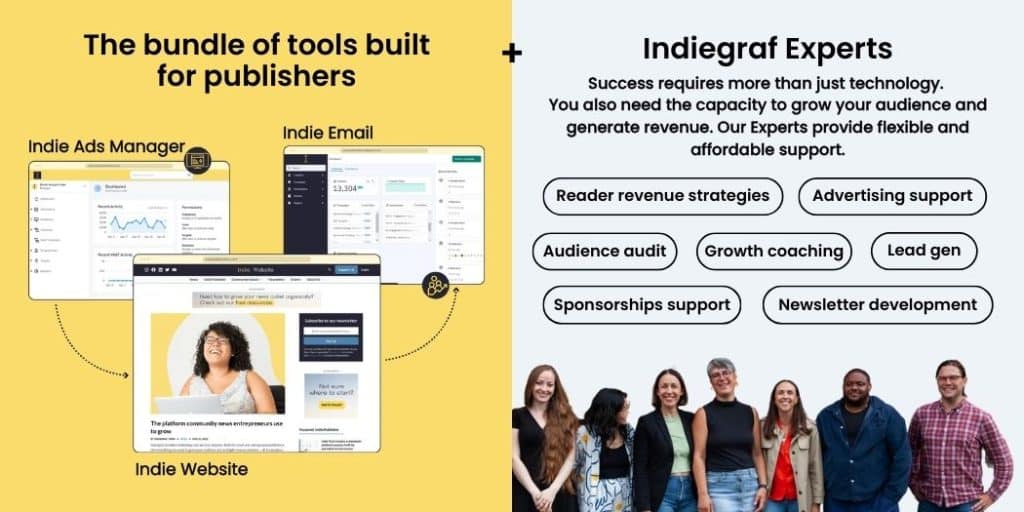
Ready to take your sponsorship strategy to the next level? Indiegraf is here to help you grow your audience and ad revenue.
For publishers seeking a robust, user-friendly solution for advertising management, Indie Ads Manager checks all the boxes. Whether you’re managing multiple publications or looking to optimize ad performance across platforms, this ad management platform offers the tools and support you need to succeed.

Indiegraf is the operating system for independent local media.