
Thank you! Your submission has been received!
Oops! Something went wrong while submitting the form.



Programmatic advertising enables publishers to connect with advertisers more efficiently, ensuring that the right messages reach the right audiences at the optimal time.
What’s the first thing that catches your eye when you click on a news organization’s website? If it isn’t an arresting headline or striking image, it’s probably an ad, served up as a homepage banner by a single advertiser. It’s also probably irrelevant to most of the readers who see it.
A Pampers ad, for instance, isn’t going to appeal to readers who don’t have children. The placement and substance of the ad doesn’t matter—it could win advertising industry awards for its brilliance and still strike out with a news organization’s readers. This is where programmatic advertising could present a new opportunity for publishers.
According to a forecast by eMarketer, roughly 90 percent of spending on U.S. display ads in 2023 will be on programmatic advertising. For indie news publishers, programmatic ads can be a way to deliver tangible results for advertisers while also staying true to their voice, mission and audience.
Keep reading this guide to learn more about programmatic advertising and if this model is a good strategy for your news business.
Programmatic advertising is a process where publishers and advertisers use software to automate the buying and selling of ad space. This streamlines the process and allows for more precise targeting and real-time bidding (RTB).
Instead of having an advertiser call or email a publisher for quotes, and then settle on a price, ad buying happens in seconds across platforms through the use of algorithms. That Pampers ad mentioned above would be bought based on its relevance to whoever would see it, not an educated guess.
Here’s how it works, according to Amazon Advertising. Let’s say you’re a publisher who wants to put up a banner ad for sale on your home page. You’ll do that through a program called a supply side platform (or SSP), which helps you pool together all of your advertising space, metrics and availability for advertising. This helps advertisers decide whether you’re a good fit.
Once that happens, and someone visits your site, a demand-side platform (or DSP) will place an automated bid based on what they’re looking for in an ad campaign, the advertising formats available on your site, and their budget. No one needs to haggle over rates in a programmatic advertising system: whichever advertiser gives the highest CPM, or cost for every thousand ad impressions, wins. Their ad automatically appears on your website.
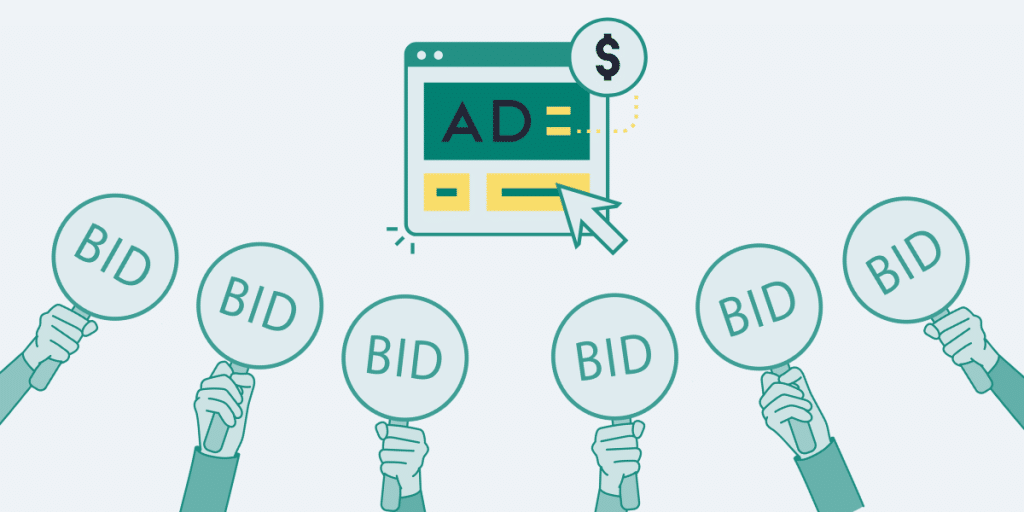
While direct sales remain a cornerstone for many indie publishers, programmatic advertising offers a way to streamline ad processes.
Real-time bidding, as described above, is the most common way to arrange a programmatic advertising deal, but it isn’t the only one. Publishers can also invite a select group of advertisers to participate in what’s known as a private auction. They can start a preferred deal, which means publishers agree to prioritize a specific advertiser’s bid in an auction. And a guaranteed deal allows publishers to make direct sales to advertisers, not unlike the traditional ad sales model.
But publishers should keep in mind that while you can set a bid floor, raising it doesn't automatically mean more money. The more expensive your bid floor is, the fewer advertisers will buy with you.
It’s important to remember that programmatic advertising is a process, not an ad format. You can deliver anything from display ads to video. That Pampers ad we mentioned before could be sold as a full banner through a DSP, or bought through an old-fashioned phone call to whoever handles advertising at your publication.
First and foremost, programmatic advertising saves time. At many indie publications, the publisher wears multiple hats, including editor, web designer and ad sales person. Programmatic ads don’t need a lot of manual input. Once you set up the parameters for a real-time bid, the SSP does the rest. This frees up valuable time for publishers to focus on overall ad strategy, editorial or other critical responsibilities.
The hands-off approach does come with a cost. According to the Google News Initiative, programmatic ads average about $1 to $5 USD per CPM, which means they’re around two to four times lower than the going rate for direct ads — although publishers can set their own prices, including a minimum ‘floor rate’ for an ad. However, for indie publishers, the sheer amount of data collected through the programmatic ad process may be well worth a discount on individual ad sales.
Advertisers use all sorts of metrics to evaluate their ad performance, according to State of Digital Publishing, from impressions to click-through rates to generated revenue. Publishers can unlock access to these metrics, and tweak their offerings accordingly. They can see who is noticing ads on their site, and start tailoring their offers in real-time auctions to advertisers who actually serve their audience.
If you happen to have a lot of parents visiting your site, and you regularly cover parenting or child care-related issues, a Pampers ad would make a lot of sense. Or, if you’re a local news site whose readers regularly click on ads featuring local businesses, a Pampers ad might be a poor use of your limited ad space, even if they happen to place the highest bid in an auction.
According to GourmetAds, other advantages of programmatic advertising are increased flexibility and greater reach. Ad campaigns can be tweaked at any time to respond to changes in the target audience or market, allowing more room for testing and experimentation. The real-time bidding process of programmatic advertising means that your ad can be placed on any spot that matches your targeting criteria, which will help you reach a larger audience.
While there are advantages to programmatic advertising, there are also limitations that publishers should be aware of, according to GourmetAds:
Looking for ad solutions? Watch our on-demand webinar, 'How to Get Started Selling Your First Ads,' and explore strategies to enhance your revenue. Watch now!
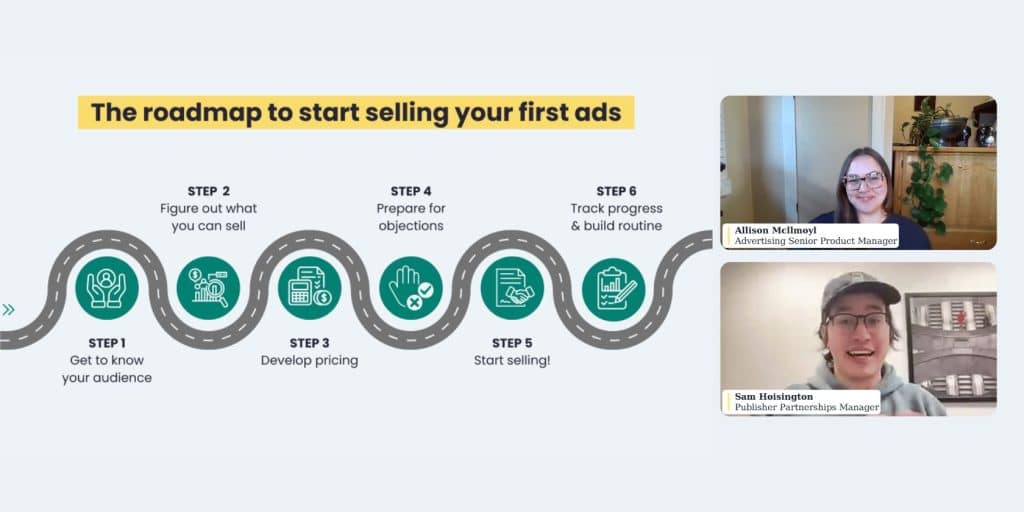
You’ll gain insights from Indiegraf experts Sam Hoisington and Allison Mcllmoyl, along with real-world examples from fellow Indiegraf publishers on what works—and what doesn’t—when it comes to advertising success.
Allison McIlmoyl, Senior Product Manager of Advertising at Indiegraf, says that before publishers jump into programmatic advertising, there are important considerations to think about.
When Indiegraf publishers are interested in programmatic ads, McIlmoyl usually asks the following questions to gauge whether this strategy makes sense for the publication:
On its own, programmatic advertising can be a very powerful tool for advertisers, but constant innovations, especially through the use of AI and machine learning, are expected to make the technique even more useful in the future. For independent publishers, these developments will make programmatic advertising even more efficient, hands-off, and relevant to their existing audience.
Advertisers are already using generative AI to draft copy, images, and even entire videos for ads. But AI isn’t just useful on the ad end. As Forbes recently pointed out, ads can be customized quickly to suit the local language, tastes and even recent search history of a consumer. If you run a news outlet in Arizona serving Spanish speakers, AI tools can quickly translate English ads, including equivalent idioms or expressions.
Machine learning algorithms can also analyze vast amounts of data related to buying and selling ads to bid aggressively on ads. Forbes says companies can use these algorithms to more precisely target ad placements, better predict user behavior, and ultimately convert more readers into paying customers.
When taken together, programmatic advertising doesn’t replace the process of buying ads, drafting an ad strategy or understanding your audience. Instead, programmatic advertising can be another strategy for publishers to generate a steady flow of advertising dollars.
📌 Programmatic ads are just one approach—compare them with other ad strategies in our comprehensive guide.
We understand that news entrepreneurship can feel challenging, but you are not alone!
Book a free chat with us to share your challenges, and we will provide tailored insights on how Indiegraf's technology and services can help you overcome them. Whether you're looking to engage your readers for the first time or seeking to enhance existing support, we’ll guide you through proven strategies to convert your audience into sustaining financial contributors.

Indiegraf is the operating system for independent local media.