
Thank you! Your submission has been received!
Oops! Something went wrong while submitting the form.




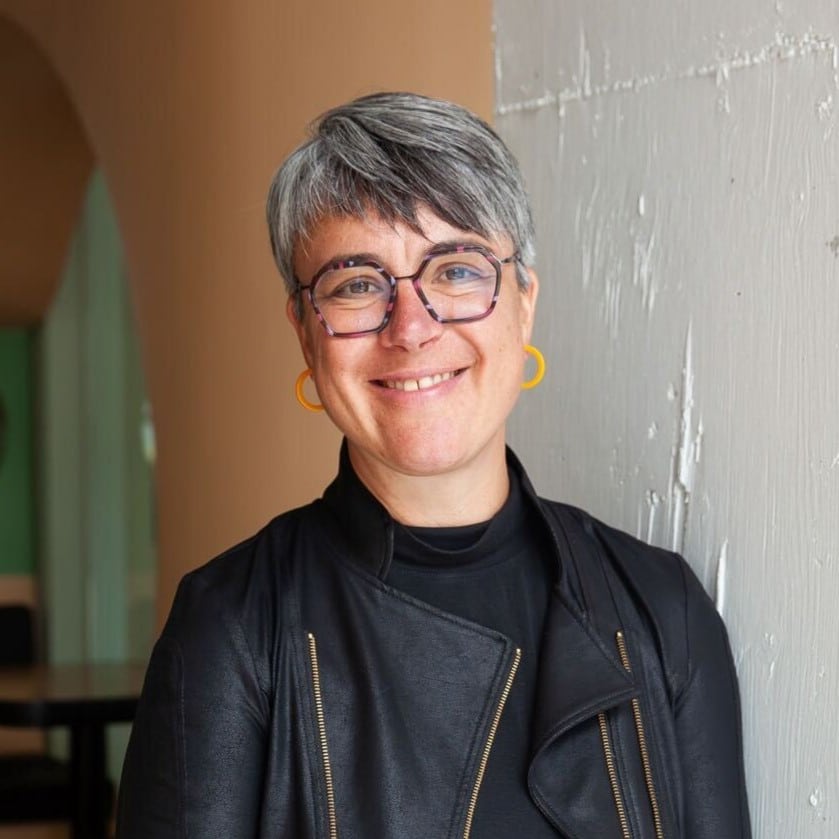


In late February 2025, during those first 100 dizzying days after Trump’s second inauguration, I found myself in the polished lobby of the Intercontinental Hotel in Florida for the Knight Media Forum. I was sitting with Maritza L. Félix, the founder of Conecta Arizona, a local media outlet that Indiegraf helped grow from its startup phase as a WhatsApp group tackling pandemic misinformation to an established local newsroom distributed through radio, newsletters, digital, live events and more.
The cognitive dissonance I felt while drinking expensive coffee in that pleasantly air-conditioned lobby with Maritza is something I’ll never forget. Conecta Arizona’s team was fielding hundreds of audience questions daily about immigration raids, racial tensions and misinformation. They were threatened with violence and detainment while reporting. And to top it all off, Conecta was losing grants because of cuts to DEI funding.
And it wasn’t just Conecta. Media of all types were starting to experience the attacks to their independence that have since become commonplace. I called my co-founder and sister Caitlin Havlak later that night and confessed a deep feeling of inadequacy. Was Indiegraf actually helping by providing a CMS and integrated publishing tools?
“Local media don’t just need a website,” I despaired. “They need defensive armor.”

Erin Millar and Maritza L. Félix at the Knight Media Forum.
Since that phone call, we’ve been on a journey to look critically at Indiegraf’s value to local media in these hostile conditions. After dozens of conversations with local media leaders, industry experts, in-depth industry research, data analysis and testing, we’ve come to a tough conclusion: we’re proud of what we’ve built at Indiegraf over the last six years, but it’s not good enough anymore.
What we learned from you is that for Indiegraf to be relevant in 2026, we have to go beyond providing publishing tools and services—we have to help local media organizations defend their independence. So that's what we're building: a toolkit that fortifies your resilience across three core pillars: diversifying revenue, deepening audience trust and enabling collaboration with other newsrooms.
Before I explain how Indiegraf does this, I need to call out a hard truth we learned from our conversations with you. Independent journalism is vulnerable to political attacks because of a weakness local media leaders have long known about: we have been building our houses on land we do not own.
To be clear, I’m as guilty of this as anyone. I’ve dedicated the last 12 years—alongside many of you—to building sustainable models to enable all communities to access quality local news. We launched digital startups and transitioned print newspapers to digital outlets in dozens of local news deserts—and pulled out all the stops to make this happen. We partnered with platforms to access audiences. We advocated to Big Tech to pay its fair share. We chased the next philanthropic cycle. We lobbied governments to subsidize our work. Meantime, we didn’t expend enough energy building independent revenue streams.
The result is a fragile local media ecosystem that is over reliant on external forces with interests that often clash with our own. The Big Tech platforms we relied on to reach our audiences have turned away from us (Meta) or replaced us with AI summaries (Google). Philanthropic capital is constrained as funders try to do more with less while grappling with their own political risks. Government funding is particularly vulnerable to disruption.
We need a radically different strategy to face what is now a local media polycrisis. It’s time for a breakup. Not just with Big Tech, but with the idea that any single external force—be it an algorithm or a billionaire—will save local journalism.
Reducing our reliance on these external forces isn’t going to happen overnight. But we truly believe that building a more resilient, independent local media ecosystem is possible.
Indiegraf is betting its future on this hypothesis: that the independent local media that survive and thrive will be those that lean into three core strategies.
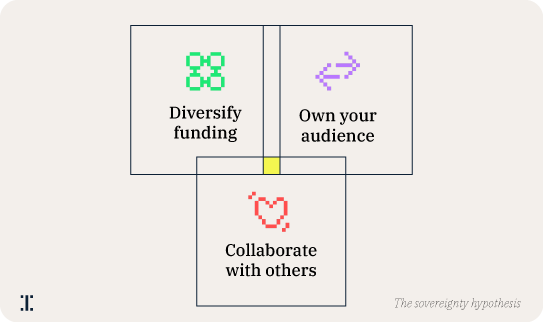
Shifting from being a CMS to an Operating System for independence is Indiegraf’s direct response to this hypothesis. While a CMS is about managing content, an OS provides the underlying infrastructure to connect your revenue streams, owned audiences and partners into a resilient, sovereign whole. Over the past year, we’ve been quietly building tools and alliances with other organizations in our space to turn this vision into a reality. Here is how Indiegraf OS is designed to defend the independence of local media:
Making our local media partners money is the core of what we do because reliable funding is the ultimate driver of independence. Indiegraf is assembling the industry’s best revenue tools to make it as easy as possible to launch and grow multiple funding streams. Earn more from your audience with sophisticated membership tools purpose-built for local media. Tap into higher value programmatic advertising sources. Get paid to publish obituaries or promote events. Soon you’ll even be able to launch a local ad store powered by an AI sales assistant—all in a few clicks.
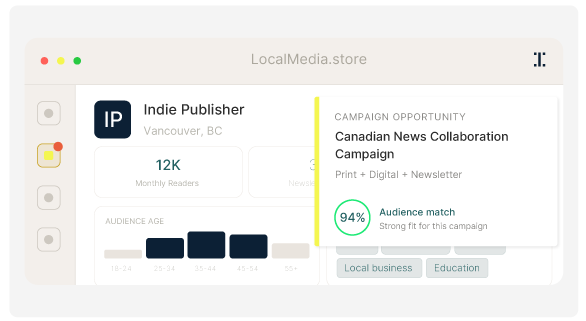
With traffic down 30-40% due to AI summaries and other platforms like Meta pulling out of the news industry, building owned audience channels is now mission critical to resilience. Indiegraf OS offers email tools with local media best practices embedded—but we know that newsletters alone aren’t enough.
That’s why Indiegraf is also bringing together innovators from the field that are proven to generate audience engagement and trust. We’re starting by joining forces with Hearken, a social impact company that has been providing technology and training to help newsrooms cultivate engaged relationships that generate revenue for eleven years.
The "go-it-alone" model of local news is a relic of a less hostile time. The Indiegraf OS is the first platform built at scale to facilitate content sharing, joint sponsorships and shared resources between independent local media outlets. Whether your newsroom is part of an own-and-operated network like our partners at the National Trust for Local News or you want to collaborate with other independent outlets in your region, Indiegraf OS allows you to tap into shared advertising revenue deals and editorial content. Our vision is to give independent outlets the network effects and power of scale of a much larger network.
We know that simply offering tech tools isn’t enough. That’s why Indiegraf will continue to offer the best customer service experience in the industry. While other tech companies make it almost impossible to talk to a real person or take forever to resolve problems, you’ll always be able to reach someone who truly cares about your newsroom, can help solve tech problems fast and are up for strategizing about strengthening your outlet’s independence.

I want to end by acknowledging a hard truth our research revealed for journalism support organizations and infrastructure players like Indiegraf. To the local media leaders who gave us some tough love, we hear you. You’re exhausted by the fragmented ecosystem of tools and services. It’s frustrating to see precious philanthropic capital go to organizations who waste resources competing with one another or building duplicative solutions. You hate it when we won’t play nice together. We need to do better.
We agree. Considering the hostile conditions facing independent journalism, we will not succeed as an industry without radical collaboration. This will mean putting aside our own organizational hangups and egos to work together in new creative ways.
Indiegraf is making the choice to lead by opening up. While we will continue to offer a CMS as part of our OS for those who want it, we are intentionally moving towards an interoperable model. Our OS is designed to plug into the tools you already use, because your independence shouldn't be contingent on using only our software.
Indiegraf is also aligning with other organizations in the field who recognize that the era of petty competitive behaviour is over. This polycrisis is too large for any of us to solve alone, and the local media leaders we serve have run out of patience for our lack of coordination. The strategic partnerships that the field needs will take many forms. Our merger with Hearken is a first step, and we’ll be sharing more in the coming weeks about how we’re contributing to other consolidation activity in the public interest.
My call to action to the field: get in touch. Let’s have some honest conversations. Let’s create space to think radically. We need to build the next phase of local media infrastructure together because, as Maritza reminded me in that lobby in Florida, the stakes are too high not to. It's time to stop building separate houses on an unstable foundation and start building a fortress together. Let's get to work.

Indiegraf is the operating system for independent local media.