
Thank you! Your submission has been received!
Oops! Something went wrong while submitting the form.



Want to generate revenue through website and email ads but not sure where to start? In this Indiegraf Webinar, learn how to level up your advertising revenue with advice and best practices from our team.
This session was hosted by Allison McIlmoyl, Sr. Product Manager, Advertising, and Sam Hoisington, who helped support publisher partnerships at Indiegraf, along with a live Q&A featuring Nicci Kadilak, publisher and co-founder of the Burlington Buzz. Here are the top takeaways from the webinar on what works — and what doesn’t — when it comes to advertising success.
Before selling website or email ads, understanding your audience is crucial. Collect subscriber data (number, paid percentage, open/click rates). Mcllmoyl recommends utilizing Google Analytics for website performance, user numbers, page views, engagement, and basic demographics. You can also leverage social media platforms for additional demographic insights to build a clearer audience picture.
“Conduct surveys,” says Mcllmoyl. “Hands down, this is one of the best ways to gather accurate information. It allows you to ask custom questions based on exactly what you want to learn. Understanding your audience is essential for demonstrating the value of your publication to advertisers and also collecting data from multiple sources.”
Mcllmoyl suggests collecting audience data and tracking it in a simple spreadsheet to identify trends over time. Use this data to build buyer personas, which represent your ideal customer with key attributes.
For website and newsletter advertising, it’s important to ensure your readers align with prospective advertisers' targeted audience. Understanding your audience through data and accurate buyer personas enhances your value to advertisers and strengthens reader connections.

The Buckeye Flame, an in-network Indiegraf publisher, invites mission-aligned sponsors—like local businesses and nonprofits—to support their independent journalism through values-driven website and email ads.
Start selling advertising simply, focusing on one initial method. Placing email ads at the top of the newsletter is a good, easily understood starting point.
Focus on advertising where you have an engaged audience. This could be a strong website, especially if your newsletter subscriber base is small. Hoisington recommends this ad format for publishers who are looking for a simple placement to start selling advertising.
"It's really prominent, easy to understand, and advertisers immediately get it when you show them an example,” he says.

The Palm Springs Post, powered by Indiegraf, features digital ad placements like this homepage banner to support local events and initiatives.
See how The Palm Springs Post grew from a solo newsletter into a leading local news source reaching half of Palm Springs. Our case study shows how they scaled to 17,420 daily newsletter subscribers and grew revenue from paying members and ads to $255,000 in 2024. 👉 Read the full story behind their growth.
How do I price my website and email ads? This is one of the most frequently asked questions from publishers. Mcllmoyl outlined a few tips and tricks for pricing ads:
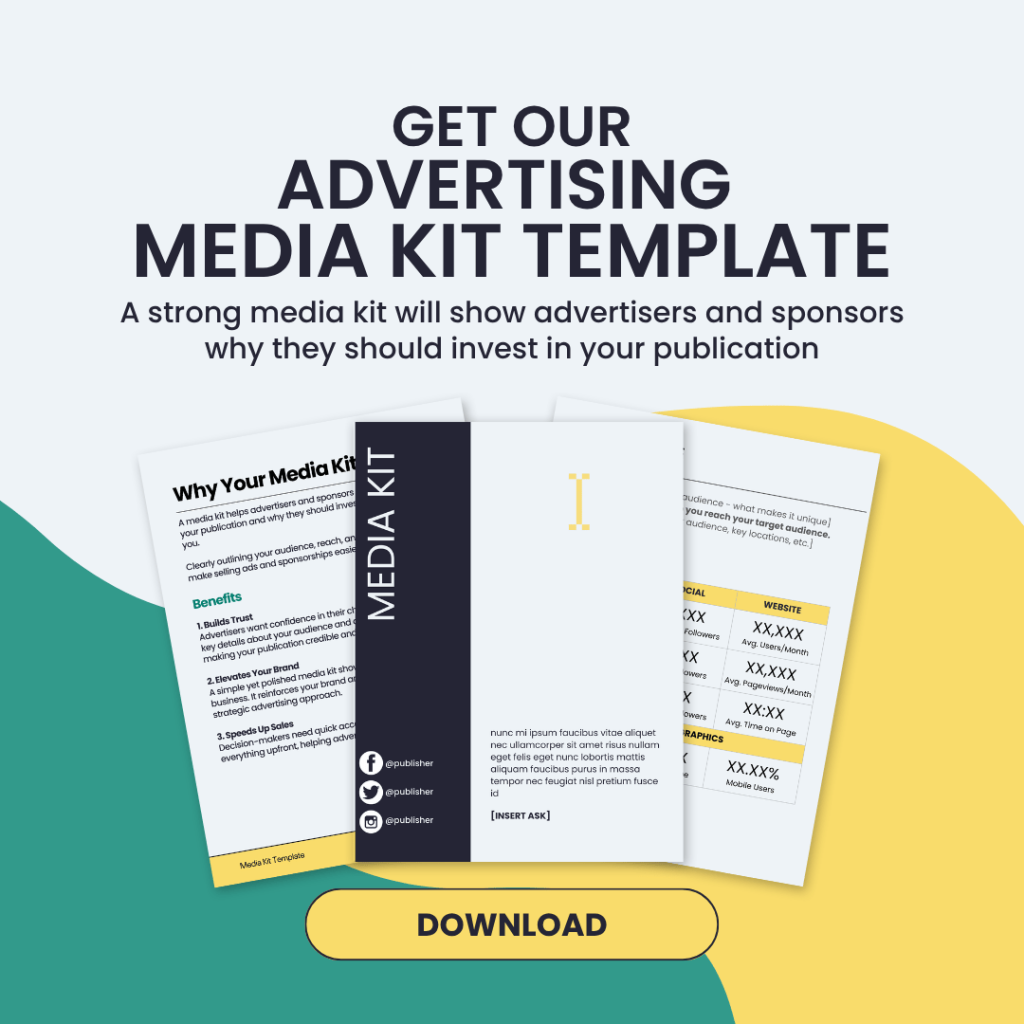
Prepare for sales objections. Internal doubts, rather than external feedback, are often the biggest hurdle.
Before sales meetings, list your own concerns, like low sales skills or low engagement. Also, think about possible objections from advertisers. If new objections arise, add them to your list.
"It's really important to remember that you have something of value,” says Hoisington. “If you're doing something niche or a local news product, that’s something that people are going to want to get involved in.”
Begin selling ads by leveraging existing connections like newsletter subscribers and social media followers. Cold calling is less effective; instead, prioritize businesses and nonprofits that already know you or share your values. When reaching out to new contacts, express genuine interest and avoid immediately trying to sell. Start with a small, easy request, like subscribing to your newsletter.
Keep initial emails concise and focus on understanding the advertiser's needs by asking questions. The goal is to build familiarity and rapport before pursuing a sale.
This method begins with warm connections. It focuses on understanding what prospects need with small initial requests. This can lead to strong, long-term partnerships and successful sales.
Schedule dedicated daily time for advertiser follow-up, aiming for immediate responses, especially with new contacts. Hoisington suggests following up regularly after meetings or proposals.
Keep reaching out until you are told to stop. Many people reply later because they have busy schedules. Finally, track all meetings and outcomes to understand your close rate and objectively assess your progress.

Indiegraf is the operating system for independent local media.