

Thank you! Your submission has been received!
Oops! Something went wrong while submitting the form.



Miles Griffis is tired, and it’s not just because of Long Covid. He is part of a growing number journalists with disabilities who are frustrated with many media outlets’ approach to disability coverage. So he decided to find a way to reach readers on his own.
In November 2023, he launched The Sick Times, an outlet dedicated to coverage of the COVID-19 pandemic and Long Covid, with co-founder Betsy Ladyzhets. The website raised over $250,000 in grants and donations, and has provided a space for readers to learn about Long Covid and the issues facing disability communities. Much of their work is focused on the research surrounding COVID-19, the stories of those who live with Long Covid and related conditions, and the treatments that continue to be explored.
Griffis, who has Long Covid, says that he found very few journalists outside of the disability community who were taking the chronic condition seriously, and decided that he needed to document the experiences of himself and others
“Betsy came to me with the idea, instead of trying to place stories in all these different places, that we just start our own publication so we can cover the disease with the urgency that it deserves, and not have to wait on other publications’ timelines, style guides and all these different things,” says Griffis.
He found that in the years following the onset of the pandemic, outlets tended to see COVID as an issue that would only be covered if it was a positive story. Griffis felt that the condition was rarely reported with the depth and breadth that it still needed. One of the journalists who was doing that work, Ed Yong — who won a Pulitzer for his coverage of the pandemic — has since joined The Sick Times’ advisory board.
Whether visible or not, disabled, Deaf and chronically ill journalists make a big impact on the media landscape. Outlets like the UK’s Disability News Service and Canada’s Accessible Media Inc. have long provided a place for disability stories to find their home. Other mainstream organizations are creating jobs dedicated to reporting on the disability beat, such as CBC’s Abilicrew Placements for Excellence Program and dedicated beat reporters at outlets like the Washington Post and the New York Times.
Still, journalists with disabilities face many barriers. According to a 2022 report commissioned by the National Council for the Training of Journalists in the UK, 19 percent of journalists report having a work-limiting health problem or disability. For many, it’s uncomfortable or unsafe to be out about their identity within their newsroom. For some, it’s a case of personal preference.
In addition, being publicly disabled is often not a safe thing to be in the media. Still, longtime projects like Alice Wong’s Disability Visibility Project and the U.S.-based National Center on Disability and Journalism (of which I am an advisory board member) continue creating space for new voices.
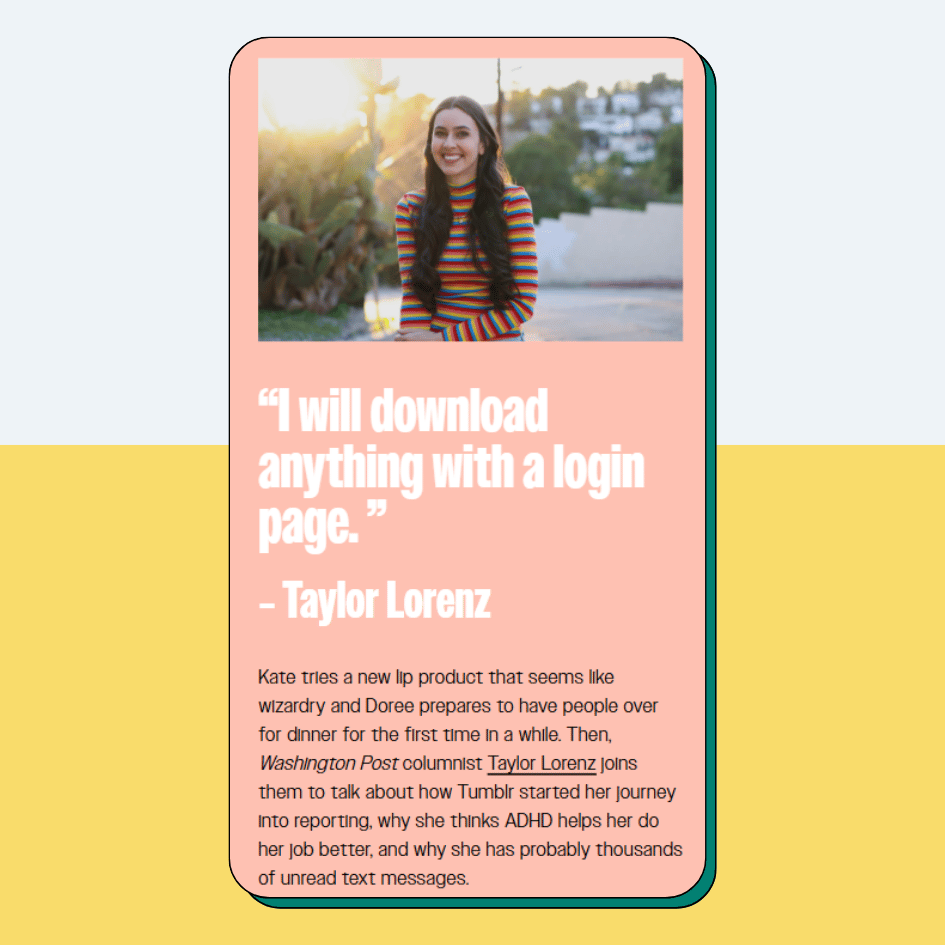
How those voices come to take up space, however, differs. Independent journalists like Taylor Lorenz — a former Washington Post columnist who recently launched her own project, UserMag — have been public about their disabilities. The Sick Times has taken a non-profit approach and like other outlets focused on marginalized communities, allow their articles to be re-published by other publications.
Griffis says that being able to hone in on their mission has been key to the website’s growth, which totals over 300,000 site impressions and three million social media impressions across all platforms since its launch.
“The more we get into our project, we're realizing it's very much a service journalism project,” he says. We really want to put out coverage and news stories that will be helpful to people with the disease.”
Now, they have a podcast and are fundraising to provide more opportunities for their engagement editor, podcast producer and freelancer pool. This is in addition to collaborations with longstanding media entities.
The Sick Times isn’t the only newer disability-led news project covering a chronically under-resourced beat.
Four American Paralympians launched Culxtured after the Paris 2024 Paralympic Games. Why? The most recent Paralympic Games garnered significant social media attention and those involved saw an opportunity. Ryan Neiswender, one of the co-founders and the company’s CEO, says the mission of the platform is to capture an untapped market.
“We feel like sports fans can become parasports fans, and are parasports fans… they just don't know it yet,” says Neiswender. ”How can you become fans of something that you can't follow?”
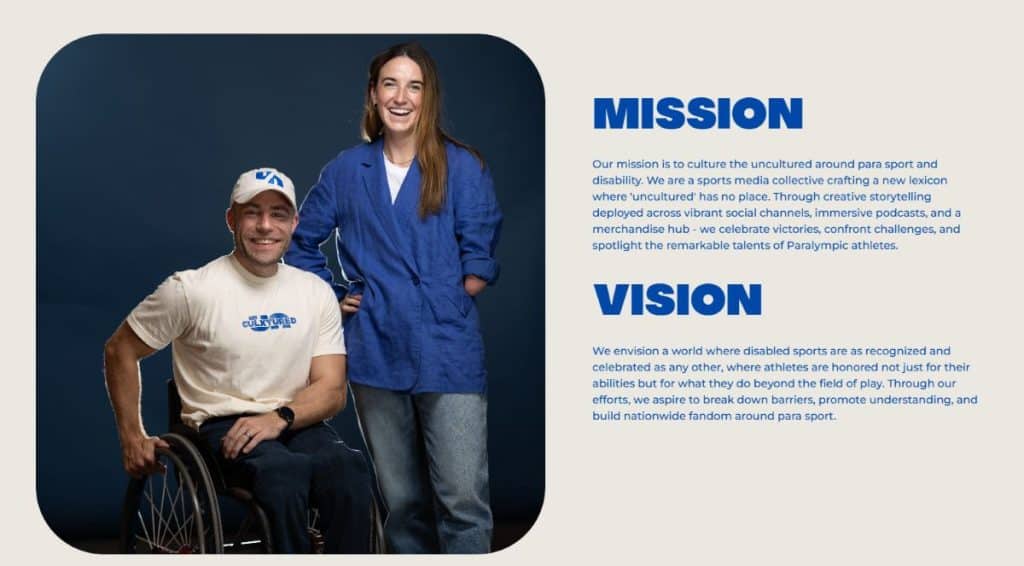
What the group of four co-founders — which also includes U.S. para athletes Dani Aravich, Chuck Aoki and Brenna Huckaby — believe is that they can form an online hub for para sports information. Their vision is to translate their own social media platforms followings into a consistent audience for news, video and audio verticals. They’re also working on developing relationships with brands to create future documentary-style projects highlighting athletes with disabilities.
However, as opposed to the non-profit route, Culxtured has decided to go the other direction. According to Neiswender, this is a choice they made because of their subject matter and the fact that they occupy a different space than the sports’ governing bodies, who usually drive the narrative.
“We started a for-profit company on purpose because we believe that we don't need more people to donate to the para-sports world,” says Neiswender. “We need people to invest and we need people to see us, not as a nice story that people feel bad for and want to be a part of, but as dynamic athletes that can build real followings and sports that can build fandom….That can start pro leagues across the country and really bridge that gap of pay, of visibility, of recognition and beyond.”
That’s the crux of many disability-led media projects and accompanying attempts to get more disabled voices in the media: To see disability-focused stories go beyond a sob story, an athletes’ "inspirational" tale, or an entirely too rosy look at a country’s healthcare or political system. In short, to show the realities of being disabled and to highlight the paths forward.
In order to do that, Neiswender says that he believes, given his background in para-sport, that disability-led media can look to a recent surge in athlete-led media initiatives. For Culxtured, that means following brands like The Players’ Tribune.
“We really need to lay out the value proposition of where we think certain brands are uniquely positioned to play in the space with us and collaborate to amplify the message,” he says.
Regardless of the business model, the approach to content or the marketing strategy, one thing is clear about disabled people starting their own media projects: After not finding much of a home for their experiences, they’re taking matters into their own hands through the lens of entrepreneurship.
For Griffis, like many disabled journalists, it’s all in the framing: “If it doesn't help the people at the center of the story, then really, who is it for?”
Here are some resources from across the web surrounding disability, media, and disability-led journalism.

Indiegraf is the operating system for independent local media.