
Thank you! Your submission has been received!
Oops! Something went wrong while submitting the form.



⚡ Topics Covered in this Guide
From an engaging email mini-course that helps grow subscribers to fundraising campaigns that highlight impact and encourage donations, newsletters and email marketing is a crucial tool for any content creators and news publishers in 2024. That’s why it’s important to understand and apply email newsletter best practices to maximize its impact.
Whether daily or weekly, newsletters offer a direct line of communication to your audience—for example, many email service providers (ESPs) like Indie Email allow readers to reply directly to the emails you send. This is a big opportunity to open a line of communication with your audience.
With email marketing, you can create personalized content, track engagement and tailor messages to meet your audience’s interests, leading to stronger connections and higher engagement. This helps build a loyal readership by delivering news and updates straight to subscribers’ inboxes. Additionally, email campaigns can drive traffic to your website and boost subscriber retention, making them an essential part of any news publisher’s strategy.
Email marketing can drive traffic to a website by providing engaging content and strategic call-to-action links that encourage readers to visit the website for more information.
Newsletters can include article previews, breaking news, exclusive content and other elements that spark curiosity, leading readers to click through to the website.
For example, Indiegraf publishes Indie Publisher, a weekly newsletter that brings our audience practical tips, case studies and insights from people who are taking the news into their own hands.
The cost of email marketing can vary depending on the newsletter platform and the features you need. Currently, Indie Email is only available as part of Indiegraf’s product bundles, which also include a fully-integrated website and ad platform. This all-in-one package helps content creators and publishers simplify digital publishing while maximizing impact.
At Indiegraf, we offer an Essentials plan, which allows you to send unlimited emails and manage up to 10,000 email contacts. This plan is ideal for small to mid-sized news publishers who are looking to build and maintain a solid subscriber base.
For news publishers seeking more flexibility and scalability, our Grow and Scale plans offer unlimited email contacts, providing the ability to expand your audience without worrying about limits.
Indie Email is built for publishers to maximize their engagement with audiences, optimize delivery of newsletters and nurture reader relationships. Our platform includes key features such as ready-made templates to help launch campaigns effortlessly and the ability to create segments for targeted outreach.
Now that you understand the important role that newsletters and email marketing can play in growing a publication’s audience and revenue, it’s time to create a successful strategy.
Keep reading to learn everything you need to know about leveraging email newsletter best practices to get your publication to the next level.
Starting a newsletter requires a lot of careful consideration. Tone, structure and audience are all usually top of mind. But the first introduction to a newsletter doesn’t come through witty writing, beautiful design, or a killer outreach campaign. It starts with the title.
Newsletter titles and headlines are the first point of engagement with a new readership. As such, they need to fit their newsletter like a hand in a glove. So, too, do newsletter headings and subject lines. If they’re out-of-step with a newsletter’s contents, readers might let the email slide on by in their already overcrowded inbox.
Appropriate newsletter titles vary by how you intend to use newsletters in your editorial strategy. Is it a tool to drive reader engagement? Is it an extension of your publication’s reach? Or are you using newsletters as its independent platform, to cover a series of stories or regular features? Your newsletter’s origin story will ultimately govern what you choose to call it.
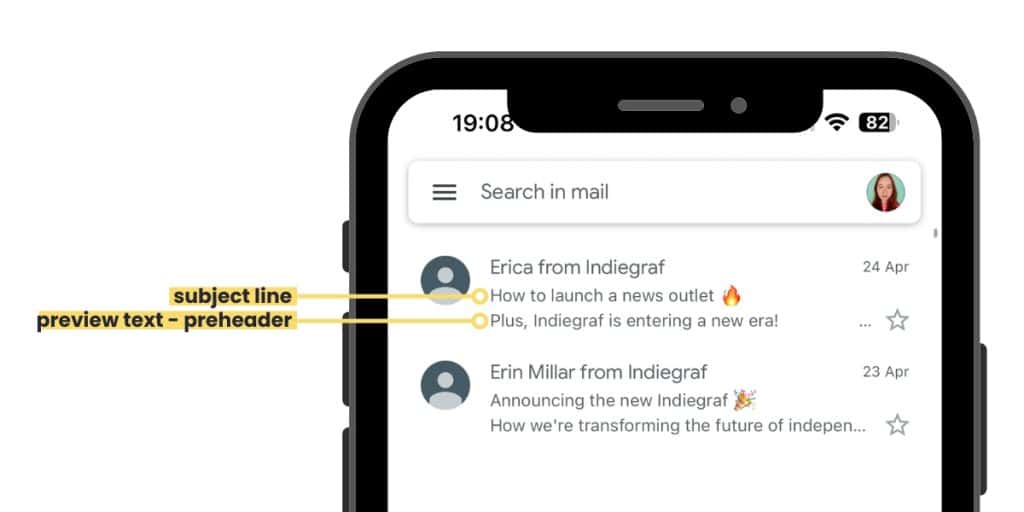
A newsletter headline is aimed straight at a user’s inbox and doesn’t have to conform to the same SEO practices of an online post. It’s possible to insert pop-culture references, or in-jokes. An engaging headline is one that not only tells readers what to expect, but is also unmistakable to any other newsletter in their inbox right now.
But you need to ensure a newsletter headline is short and snappy. As Christine Taylor, a former managing editor at the Chicago Tribune, pointed out in 2020, the first three to five words matter the most, especially if a reader is scrolling through a newsletter quickly on their phone. Anything longer might not fit on their screen.
Finally, the best subject lines for email newsletters play with the contents of the newsletter itself to drive engagement. They refer to items buried deep down in the body so readers actually scroll all the way to the bottom instead of just skimming the top. Or, they quickly summarize the takeaway of a big story and let the newsletter’s body unpack all the details.
The newsletter introduction is where the process of converting a first-time reader to a fan begins. That might be a simple recap of a major story on your site’s homepage, but it could also be an appeal to readers, a call-out for sources or stories, or even its own independent editorial platform.
Newsletter introductions are not a one-size-fits-all affair, just as no two publications will share the same tone. But there are a few ground rules all successful newsletters consider when publishing.

IndigiNews’ newsletter introduction example.
With the shareability of social media and the adaptability of a blog, email newsletters are an ideal tool for independent publishers and journalists to reach their audience and form the foundation of a marketing strategy. Getting a newsletter off the ground, and making it work for your publication, requires careful thought. Its purpose, design and timing all matter.
For Nicci Kadilak, founder and editor-in-chief of the Burlington Buzz, her newsletter was more than just a marketing tool: it was her entire platform for the first two years. “It needs to be an essential part of your platform, because it connects readers with you as an individual, not just the news organization as a sort of nameless, faceless entity,” Kadilak says. “It just creates another touch point for you and your readers.”
Kadilak’s daily newsletter lets 1,600 subscribers know about the town of Burlington and how it works in the span of a five-minute read. But it also acts as a critical tool to help grow the Burlington Buzz’s “hive” of paid subscribers, gather news and maintain a warm relationship with readers. Newsletter strategy is not only about growing a publication’s reach, but leveraging the intimacy of email to hit your marketing goals.
Newsletters combine the best of several different marketing avenues, but their real strength lies in their ability to create community. When combined with other marketing approaches like live events or social media, the results can pay off spectacularly for indie publishers.
Social media, a mainstay of digital marketing, doesn’t just draw attention to a newsletter. When used right, it can drive community engagement on its own. The Burlington Buzz started by identifying active Facebook groups in town with residents that would benefit from local news, and then posting relevant stories there. “We still do that,” Kadilak says.
One of the most painful parts of being an independent news publisher is managing so many different technology tools. You need to get your website to speak to your newsletter platform, make sure your payment system is triggering automated emails, find someone to maintain your systems, troubleshoot bugs, and on and on … it’s enough to make the most tech-savvy journalists’ heads spin.
That’s why Indiegraf offers Indie Email, a newsletter and email marketing platform purpose-built to grow small and startup newsrooms’ audience and revenue.
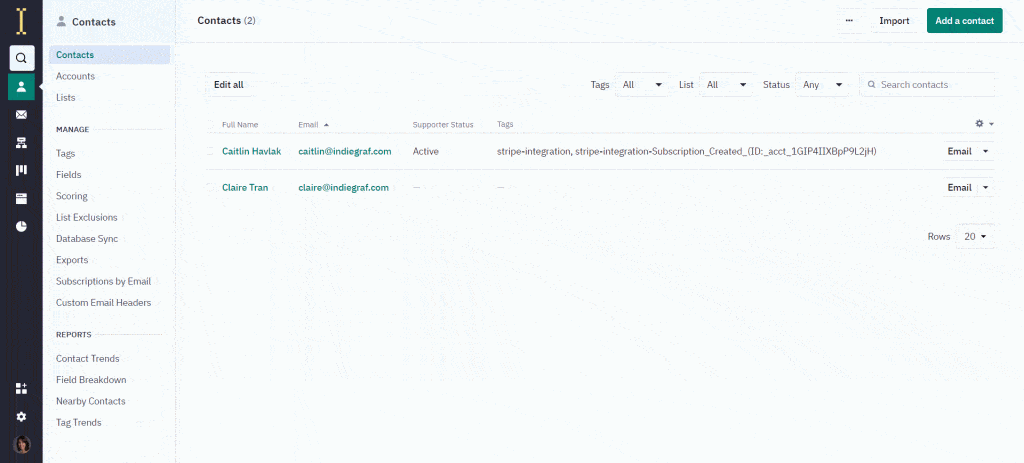
Indie Email is the newsletter platform to drive audience engagement and revenue.
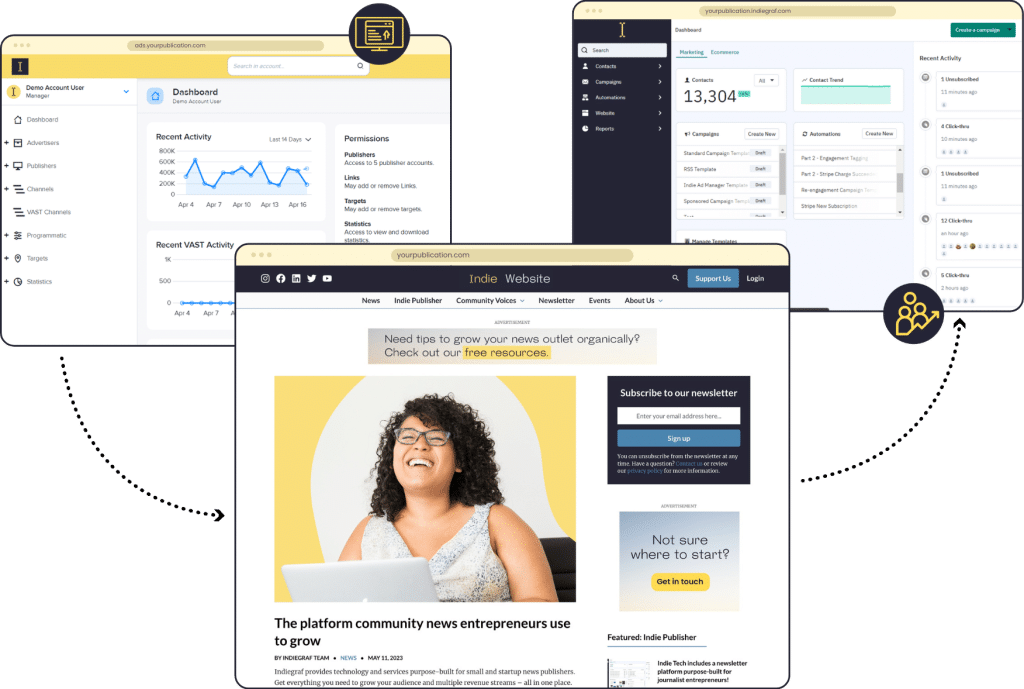
Indie Ads Manager, Indie Website and Indie Email. The bundle of tools built specifically for newsrooms.
Want tailored solutions for your publication? Schedule a free chat with our team!
You don’t have to be a graphic designer to create a good newsletter design. A well-designed newsletter will help a publication stand out in readers’ inboxes—and keep them coming back. From email layout to email design tips, follow these design best practices to make your email newsletter a visually stunning product.

Before your subscribers become superfans, you must convince them that your email newsletter is worth their time. The best newsletters feature a visual presentation that elevates readers’ experience, making finding the information they seek easier and more pleasant. Intentional newsletter design will add more value to your news product.
The best-designed newsletters guide readers through the email layout, highlighting key information and influencing readers to take action, whether that’s clicking on an article or making a financial contribution.
As an extension of the brand, the newsletter should convey the mission of your journalism. If you don’t already have brand guidelines, answer this question: how should people feel after reading my newsletter?
From there, pick fonts and colors that match the style and tone of the newsletter’s content. These visual elements can convey emotions in the same way as an editorial voice. For example, rounded edges and sans serif fonts feel more approachable; whereas sharp edges and serif fonts convey knowledgeability and authority. A good rule of thumb is to pick no more than two fonts and colors (aside from black and white) for a newsletter.
Optimizing email marketing images can make your newsletter more effective, engaging and accessible. Over time, readers will come to anticipate highly curated and relevant experiences every time they open an email, and the email image strategy you use will play a key role.
The right email image selection will not only catch the attention of readers but it will keep that attention by adding vital context, comprehensibility, and memorability.
This is important because, in addition to the editorial purpose of your newsletter, it is fundamentally a marketing tool intended to create and reinforce a call to action, such as convincing readers to visit the website or become a subscriber.
Read more: "Newsletter Images Best Practices" to learn how to choose the correct image format for your newsletter, how many images to include, the best sizes for email newsletters, and more!

60/40 rule for newsletter images.
Don’t forget image accessibility! Alt text, also known as alternative text or alt attributes, is a critical component of web accessibility, including in newsletter design. It holds particular significance for individuals reliant on screen readers, making it a fundamental aspect of email accessibility guidelines.
Email newsletter services will provide the option of including alt text for each image. Familiarizing yourself with how to write highly effective alt text will ensure your newsletter reaches every member of your audience.
When hyperlinked, images can also make for a smoother overall user experience while driving traffic. Readers are more likely to click an image versus text if they are looking for more context. For images that are also hyperlinked, alt text is important for explaining the image’s click-through function to specific readers.
Between reader revenue, paywalls, advertising and merch, there are many newsletter monetization strategies that can be developed for your product.
Financial sustainability—and even profitability—can be daunting for publishers. It all boils down to one question: “Do readers think my work is worth paying for?” If a product’s mission overlaps with the audience’s needs, the answer is yes! Once you’ve validated your idea, you can test out different monetization strategies.
A newsletter’s potential revenue depends on three main factors:
Potential advertisers and their advertising budget: In cases where the target audience does not have a lot of disposable income, consider if you can make up for that percentage of revenue with advertising.
There are three main pathways to monetization for newsletters:
Don’t rely solely on one approach. Identify a combination of monetization strategies that suit your product and audience. Then, choose a primary revenue stream to focus on. Each option demands time and attention to achieve success!
Reader support refers to money that readers voluntarily give to a publication—not to access the newsletter. Newsletters that make money primarily through this method are successful because their readers believe in their mission, find their journalism valuable and want to sustain their work. Some of these news publishers are registered as nonprofits or have charitable partners, which allow them to provide tax receipts.
It will take time to grow the proportion of readers who make financial contributions. Based on data from the Indiegraf network, three percent is a good conversion rate from newsletter subscribers to paying supporters.
Subscriptions are another kind of reader revenue where some or all of the content lives behind a paywall. Publications and newsletters that make money primarily through subscriptions have a strong editorial product and a readership with the financial means to pay for access to it.
A newsletter with a hard paywall (where readers can’t access anything unless they pay for it) is rare. More commonly, newsletters will have a free edition or offer previews to paywalled content to try to get subscribers to convert. Email service providers like Indiegraf offer easy ways to send subscriber-only newsletters.
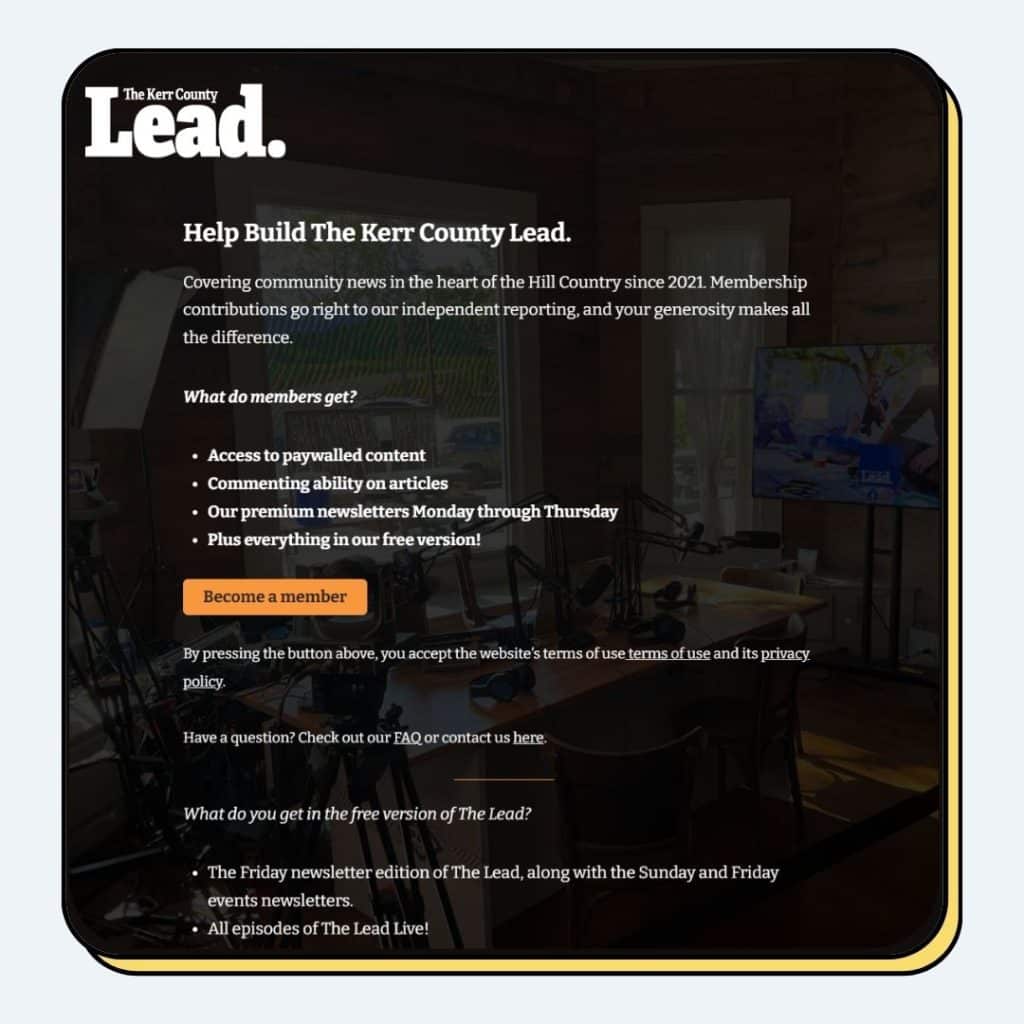
The Kerr County Lead offers a membership to access paywalled content and their premium newsletter.
Advertising and sponsorships sell a newsletter’s readers as a product to advertisers. Newsletters that successfully leverage this monetization strategy usually have a large audience, an engaged readership (i.e. high open and click rates), a niche readership (e.g. newsletters focused on a specific industry) or a combination of the three.
At the end of the day, newsletter ad spots allow advertisers to target a specific audience and communicate with them directly. This means bypassing ad blockers and achieving higher engagement compared to traditional display ads.
It takes time, effort and plenty of perseverance to build a successful newsletter strategy. Here are case studies from four independent publishers in the Indiegraf network on what worked for them.
Athens County Independent, an indie publisher based in southeast Ohio, runs a weekly flagship newsletter called The Indy, as well as two other service-oriented newsletters called The Bulletin Board and The Scoop. In the absence of print circulation or door-to-door delivery, Corinne Colbert, co-founder and editor-in-chief says newsletters act as a distribution strategy to get the Independent’s work in front of audiences, rather than waiting for people to come to them.
“It’s a push instead of a pull,” she says. “It’s hard to get readers to make a habit of checking a website.”
For the Independent, the results speak for themselves. All three newsletters average open rates of around 50 percent, according to Colbert. They have also grown from a readership of around 1,000 last year to just under 5,000. “I see it as integral to our work,” she says. “On the internet, there’s a lot of competition for people’s eyeballs.”
At the Athens County Independent, the Scoop and the Bulletin provide weekly updates on public meetings, local events and even major road closures. Colbert says the Independent is looking into enhancing the Scoop’s service journalism through a mass texting tool. “It’s part of the strategy of public service journalism,” she says, “getting information out to the community.”
At the Independent, email marketing integration means bringing email sign-up sheets to Athens County events. It’s a way to carry on a conversation well after a gathering ends. “It’s an opportunity, not only to get email addresses but also just to get your name and your brand out there,” Colbert says. “It’s a way to communicate and engage with your readers.” While they can be tiring, Colbert says she’s never regretted any event the Independent has ever done.
The most powerful way to integrate a newsletter into your marketing strategy is to use it to have actual conversations with readers. Colbert points out that very few readers ever talk to a journalist in their lives, let alone carry on a conversation with one.
With help from Indiegraf, The Discourse created two email series, also known as mini-courses, which responded to questions about local history—for example, Curious in Nanaimo and History in Cowichan as well as high-demand news topics such as Food for Thought and The Reconciliation Discourse.
Each course was packaged as a free, usually six-part series delivered weekly or daily, and each grew their subscriber base by about 30 percent.
The six stories shared in the history series were direct answers to reader questions. Was there really an exotic zoo near Long Lake Park, or was it an urban legend? Why did so many Sikh immigrants gravitate to Paldi? What happened to the Cowichan wool carding machine?
If history isn’t your audience’s jam, consider any form of evergreen content you know your readers care about and that you cover well. Since the goal is to get new subscribers to stay and engage with ongoing work, choose a series that reflects what your target audience cares about.
No survey? No problem. Use Google Trends or Reddit to find out what your target audience wants to know.
The Buckeye Flame, Ohio’s only LGBTQ publication, started as a weekly newsletter. Today, the Flame has 6,200 subscribers and counting.
A lot of readers mistake The Spark, the publication’s Thursday newsletter of original reporting, for The Buckeye Flame itself. “In some ways, this whole thing is reverse engineered to the newsletter,” Ken says. The goal is to put five original articles in every Spark without throwing in reruns. At this point, Ken says, you can check out the newsletter and not see his name near any of them: an impressive feat for a publication with just one dedicated staff writer.
But the Spark doesn’t just act as a promotional tool for the Flame’s editorial side. It also sparked a Wildfire—aka, Wildfire Week, the Flame’s campaign for NewsMatch, the largest collaborative fundraising campaign for U.S. nonprofit news organizations. “With Indiegraf’s help, we really created a whole communications plan, but we focused it on one week instead of doing the two month NewsMatch that a lot of people do,” Ken says. “We raised $26,000.”
He’d only expected, at most, $2,000. But the wild success of this campaign helped the Flame create two internship positions and hire a part-time philanthropy specialist. It used the newsletter to draw in revenue, on a tight deadline, and drive the Flame to newer and greater heights. As Ken put it, “Wildfire Week was hot.”
He may call himself “just a guy writing a newsletter,” but The Palm Springs Post founder and editor-in-chief Mark Talkington has the California-based startup news outlet on a growth trajectory worthy of boasting.
When Mark first joined the Indiegraf network, he had about 1,500 engaged subscribers. In just two years, the hyperlocal, independent online news outlet has grown to 13,000 subscribers, with reader and sponsorship revenue that sustains more in-depth daily journalism on Palm Springs issues like homelessness and short-term vacation rentals.
After initially producing the newsletter outside of his regular day job, Mark realized he was on to something and enlisted Indiegraf for support to launch a website and migrate from Substack.
Mark credits the success in part to the gap the outlet fills. The local daily paper shrunk to “a ghost of its former self,” as he puts it, while the local TV stations focus primarily on crime. “We’re not in a news desert, there’s just a way to do it differently,” he says.
Over the years, The Palm Spring Post has also embraced effective reader revenue tactics. For example, The Post uses a live countdown timer in its campaign emails, which urges readers to contribute during the final 48 hours of the campaign. This extra reminder helped yield at least 50 financial responses out of the 300-plus contributions received during a 2022 campaign.
Daily editorial newsletters also remind readers of The Post’s value with testimonials at the top alongside a call to action to pitch in financially.
The best newsletter in the world won’t make a difference to your publication’s strategy if it sits in a reader’s spam folder, unread. Or even worse, it never arrives in their inbox at all. Publishers who have newsletters need to understand why their latest editions aren’t reaching readers and tweak their tactics accordingly. Keep reading to learn about email newsletter best practices when it comes to deliverability, compliance and accuracy.
Email deliverability is the degree to which an email reaches its intended audience without falling victim to various technical and software issues. The deliverability of an email refers to the probability of it arriving in the recipient’s primary inbox. Understanding email deliverability best practices and things to avoid, is the key to pulling off a successful newsletter.
For publishers, that means learning the basics behind improving email deliverability and the type of metrics a winning email newsletter strategy will produce. Read on if you’re looking to improve your open rate and up your publication’s newsletter game.
An email newsletter’s performance is impacted by how acceptable it seems based on security and guidelines set by your recipients’ inbox providers (i.e. Indie Email, Gmail, Outlook, Apple Email, or other email services). This relationship is cyclical. If these email deliverability best practices aren’t consistently followed, these providers will likely start downgrading your email’s performance.

Following email deliverability best practices will increase the likelihood of emails landing in the recipient’s primary inbox
There are plenty of factors that play into a publisher’s email deliverability. Here are six to look out for:
Email compliance is a set of email marketing regulations that are commonly known as anti-spam laws. This type of legislation regulates email communications between businesses or organizations, and their consumers. The role of email marketing compliance is to protect user privacy and data. It also ensures that users remain in control of who is allowed to send them marketing communications and who is not.
Some jurisdictions outside of North America hold far more rigid email compliance regulations such as Europe’s General Data Protection Requirement (GDPR). Individuals and organizations holding the personal data of a resident are still required to comply with the GDPR. Therefore, it’s best to set up your newsletter so it complies with the strictest regulations.
It is best to review a comprehensive summary of CAN-SPAM and CASL. You may also choose to seek independent legal advice as you scale your email marketing operations.
Almost all email compliance standards start with an email consent policy. This is the requirement that users must give you implied or explicit consent to send them emails. This begins when an individual grants you that permission by providing their email address or checking a box.
Some examples include:
Once consent is received, your relationship with the subscriber is regulated by the relevant email compliance laws where your reader resides. This includes what type of emails you’re allowed to send and how you are required to handle your readers’ private information.

Read more: Dive into our comprehensive guide "Email compliance guide for newsletters" to discover essential insights on email compliance regulations, best practices for collecting email addresses, and tips to avoid common pitfalls in newsletter management.
Whether the news is being published on a website or sent out in an email newsletter, journalists still have the same responsibility to make sure their reporting is accurate. While a newsletter might seem less public since you’re sending it directly to readers’ inboxes, it’s always a good idea to make sure the information has been fact-checked if you’re publishing the same stories on your website or social media.
Fact-checking is also important from a liability standpoint. If you’re reporting on allegations against a person or a corporation, you might want to take additional steps to protect yourself. Accuracy in journalism is crucial in such cases.
With the increasing spread of misinformation, there’s been a growth in fact-checking resources that journalists can turn to.
If journalists are concerned about a potential legal liability, they can consult a media lawyer—though the costs can be prohibitive.
Newsletters can be a key part of growing your publication’s reach and revenue. That’s why it’s important to understand how to measure and interpret your newsletter metrics. In this section, we break down the important numbers to look for when analyzing newsletter metrics and the key performance indicators worth paying attention to.
The most important newsletter metrics or KPIs to track are open rate, click rate, click-to-open rate and unsubscribe rate. This article will talk more in-depth about some of them, but here’s a quick glossary for now:\

Tracking these email newsletter metrics will give you a comprehensive view of your email campaign’s performance, allowing you to make data-driven decisions to improve your newsletter strategy.
Additionally, these metrics are closely tied to email deliverability. High open rates and low unsubscribe rates positively impact your sender reputation, ensuring that your emails land in your subscribers’ inboxes rather than their spam folders.
A good email deliverability rate, or the number of emails that reach their target inbox, is usually around 95 percent or higher from a major email service provider, according to Omnisend and ActiveCampaign. Don’t worry if this number never hits 100 percent: no one’s email deliverability rate does.
The newsletter’s bounce rate should also be kept as low as possible. This refers to the rate of emails that are rejected due to temporary problems (known as a “soft bounce”) or an invalid email address (called a “hard bounce”). It will never be zero, but according to Litmus and Omnisend, it shouldn’t be higher than about two percent to three percent.
Think about the purpose of your newsletter. If you’re running a newsletter targeted to a niche audience, such as a small town or city, you might have a smaller audience cap compared to a more general interest newsletter.
For example, if you’re running a newsletter to target the residents of a specific town or city, growing your email list might not be a priority. Rather, you may want to focus on click rates if you’re trying to generate revenue or increase audience engagement.
It may also be scary to see that some of your readers have unsubscribed to your newsletter. Just remember that some unsubscribes are normal. Publishers in the Indiegraf network have an average unsubscribe rate of 0.17 percent. Like other metrics, it’s important to ensure you’re tracking trends rather than isolated numbers.
Email newsletters are a game-changer for independent publishers. They're your direct line to readers, a traffic driver, and a potential revenue stream all rolled into one. But like any powerful tool, they require skill and strategy to wield effectively.
We've covered a lot of ground in this guide, from content best practices to design strategies, legal considerations, and analytics. The key takeaway? Your newsletter should be as unique as your publication. It's not just about following trends—it's about creating something that resonates with your specific audience and aligns with your publication.
Ready to take your newsletter game to the next level? Indiegraf is here to help. Our team of experts can guide you through every step of the process, from conceptualization to execution and optimization. Let's work together to create a newsletter that not only informs and engages your readers but also drives real results for your publication.

Indiegraf is the operating system for independent local media.