

Introduction to email deliverability best practices
The best newsletter in the world won’t make a difference to your publication’s strategy if it sits in a reader’s spam folder, unread. Or even worse, it never arrives in their inbox at all. Publishers who have newsletters need to understand why their latest editions aren’t reaching readers and tweak their tactics accordingly.
Newsletters aren’t just about bringing in subscriber dollars (although they’re good at that too). Newsletters build a direct connection with your audience, acting as “the friend who checks in every day like clockwork,” says Medill Local News Initiative director Tim Franklin. “You don’t have to seek it out. It’s as familiar as a morning cup of coffee. Your loyalty to it grows over time.”
Simply put, email newsletters deliver the attention and engagement a publisher needs to drive audience growth. But to do that, the email needs to reach a reader’s inbox.
What is the definition of email deliverability?
Email deliverability is the degree to which an email reaches its intended audience without falling victim to various technical and software issues. The deliverability of an email refers to the probability of it arriving in the recipient’s primary inbox. Understanding email deliverability best practices and things to avoid, is the key to pulling off a successful newsletter.

For publishers, that means learning the basics behind improving email deliverability and the type of metrics a winning email newsletter strategy will produce. Read on if you’re looking to improve your open rate and up your publication’s newsletter game.
Why does email deliverability matter?
A newsletter’s performance is impacted by how acceptable it seems based on security and guidelines set by your recipients’ inbox providers (i.e. Indie Email, Gmail, Outlook, Apple Email or other email services). This relationship is cyclical. If these email deliverability best practices aren’t consistently followed, these providers will likely start downgrading your email’s performance.
That might mean your carefully crafted newsletter gets shunted into a reader’s spam folder. At worst, they might be blocked entirely. As Chad S. White, an expert on the email industry, pointed out, all of the major factors governing an email’s treatment in someone’s inbox are directly or indirectly under a publisher’s control.
What factors affect email deliverability?
There are plenty of factors that play into a publisher’s email deliverability:
- Authentication: Systems like DomainKeys Identified Mail (DKIM) help an inbox provider verify that an email it receives is authentic, and helps verify your email domain. It adds a cryptographic signature to emails that makes it much harder for scammers to impersonate domains. If emails are verified using a DKIM, inbox providers are far less likely to block it.
- Blocklists: To counteract spam, inbox providers tend to consult blocklists, or lists of suspicious email senders, to keep their users as spam-free as possible. Some of the bigger blocklists include Spamcop, Barracuda Central and Google Safe Browsing. It isn’t the end of your online reputation if you happen to end up on one of these lists, but it might make life a bit harder.
- Reliable email lists: Anyone who sends mass emails will have a list of everyone who’s supposed to receive them. It is possible to buy email lists, but this isn’t a good idea. Inbox providers pay close attention to inactive recipients to guard against spam. If your emails receive a lot of bounces, it tells an inbox provider that your list isn’t up to date, and future emails may be marked as spam.
- Reader feedback: Inbox providers like newsletters with lots of reader responses. This means publishers have reasons to send emails that are useful and informative to the people on their list, as opposed to just stuffing their inboxes with unwanted chaff. Conversely, a lot of spam complaints by unhappy readers could get you in trouble.
- Open rate: If your open rate is consistently low, it’ll start to chip away at your sender reputation with inbox providers. According to Omnisend, a consistently low open rate will eventually impact the deliverability of your campaign. Keep in mind that open rates are typically nowhere close to 100 percent: Indiegraf’s benchmark is around 45 percent.
- Volume: Inbox providers screen emails from brands according to frequency and consistency. To make life easier, pick a day (or days) to send your newsletter and stick with it. A firehose of emails, or a sudden spike in sends, is common scammer behavior. In fact, small-scale senders have an advantage, according to White. They tend to send emails over shared IP addresses, which helps even out email volume and makes it look more consistent to inbox providers.

What does good email deliverability look like?
Keeping all of the above considerations in mind, a good email deliverability rate, or the number of emails that reach their target inbox, is usually around 95 percent or higher from a major email service provider, according to Omnisend and ActiveCampaign. Don’t worry if this number never hits 100 percent: no one’s email deliverability rate does.
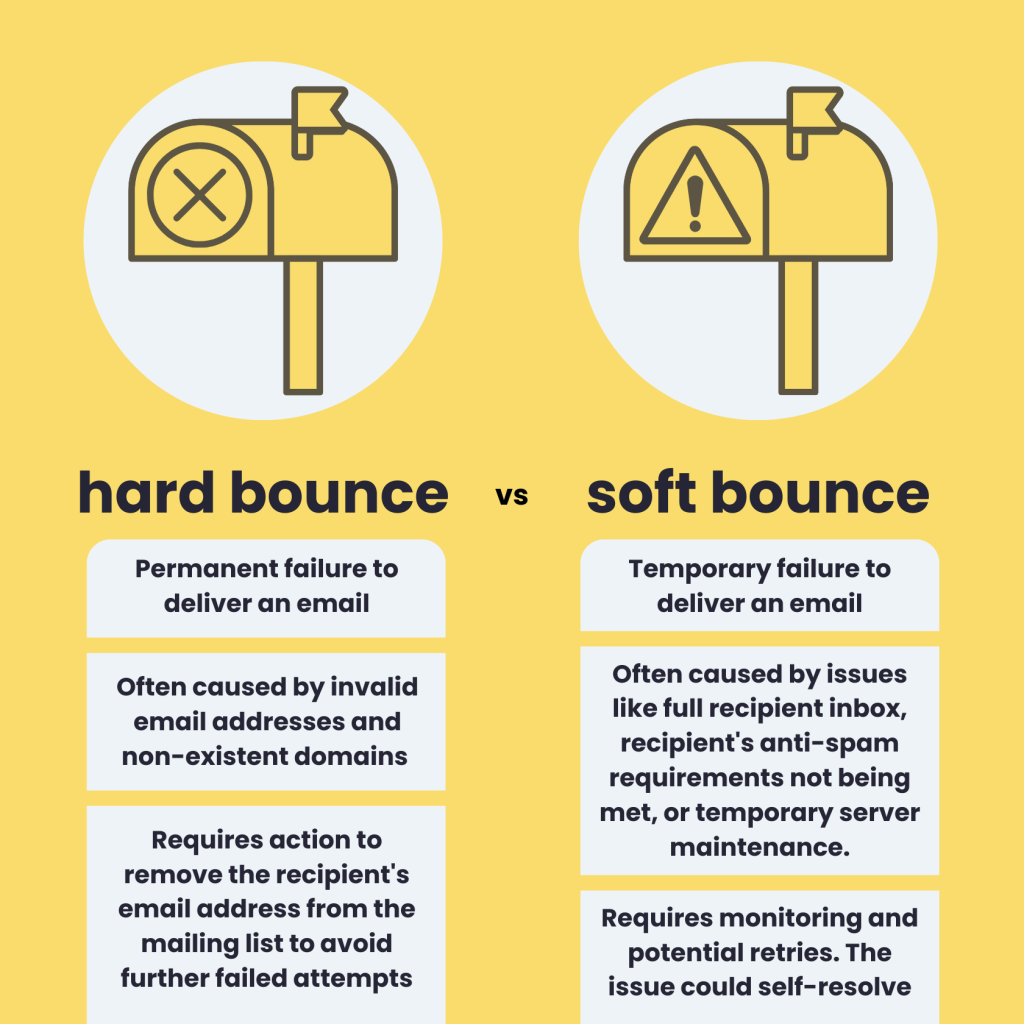
The newsletter’s bounce rate should also be kept as low as possible. This refers to the rate of emails that are rejected due to temporary problems (known as a “soft bounce”) or an invalid email address (called a “hard bounce”). It will never be zero, but according to Litmus and Omnisend, it shouldn’t be higher than about two percent to three percent.
Spam complaints must be kept to an absolute minimum to ensure a good email deliverability rate. For Google and Yahoo addresses, which make up the largest two inbox providers, that means no more than 0.3 percent of all emails sent per campaign. By Google’s definition, a “campaign” is any batch of emails sent daily to a minimum of 5,000 readers.
How can publishers improve email deliverability?
Aside from authenticating your domain, keeping in touch with readers and maintaining a steady publication rate, improving email deliverability happens in all kinds of ways.
Compliance-focused unsubscribe
One easy step is to ensure your newsletter has a list-unsubscribe feature that gets a recipient off your address list within two days, in just one click. This feature was made mandatory by both Google and Yahoo in February 2024, so violators may find themselves consigned to the spam folder. Many email service providers like Indiegraf make it easy for contacts to manage their subscription preferences.
Audience segmentation and personalization
Another recommendation is to send more segmented, personalized and even automated campaigns to ensure your emails are as unique as your audience. As White explained, positive engagement has become “one of the most important factors affecting deliverability.”
In other words, it isn’t enough for indie publishers to just cast as wide a net as possible through email newsletters. They need to carefully consider everyone who receives their messages and ensure they’re happy with what they’re getting.
Email list hygiene: Cleaning your contacts
Practice good email hygiene by regularly cleaning your contact list. According to ActiveCampaign, keeping a clean list will ensure you only send emails to people who want to hear from you. What does cleaning your contacts look like? You will want to remove contacts from the list who are unsubscribed, disengaged or inactive.
Most Email Service Providers (ESP) have engagement management and tagging tools to make segmenting these contacts easy. For example, Indie Email features advanced automations that allow you to create segments for more targeted outreach. Keeping your list clean will improve open and click rates. This, in turn, increases email deliverability and contributes to a positive sender reputation.
Understand consent
Before you send an email to a contact, it’s important to ensure that they’ve consented to receiving emails from you. Generally, two types of consent can be given, implied and explicit.
According to HubSpot, implied consent is when someone gives you their email for a business purpose, but has not explicitly consented to receiving emails from you. On the other hand, explicit consent is when someone opts in to receiving emails through written consent, clicking a checkbox or confirming through double opt-in.
Single opt-in is when the individual takes one action to subscribe to your newsletter, such as submitting their email through a form. Double opt-in is when someone is required to take two actions to subscribe. When the form is submitted, the individual will receive an email asking them to confirm their consent again.
Whitelisting
This is the act of your readers adding your newsletter to their contacts list, which drastically reduces the likelihood your emails are caught in spam filters (and ensures your readers never miss a newsletter).

Want to optimize your newsletter’s production with automated workflows that save time and keep your audience engaged? Indiegraf’s team can help!


