Independent publishers need more than one revenue stream to be sustainable. Beyond reader revenue, outlets should also consider embracing an ad sales and paid sponsorships strategy.
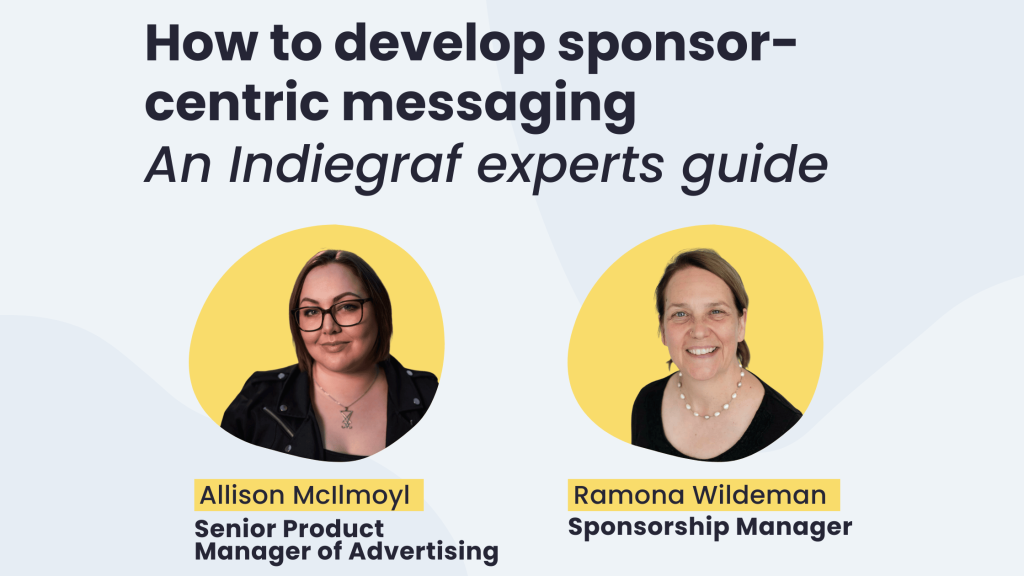
Indiegraf’s Allison McIlmoyl, Senior Product Manager of Advertising, and Sponsorship Manager Ramona Wildeman share their best practices and advice for developing the value proposition and messaging that’ll help publishers find success in this stream.
What are sponsor-centric or advertiser-centric value propositions and messaging?
Allison: Sponsor-centric messaging is messaging that puts your sponsors at the center — or heart — of your work. In order to connect with prospective sponsors meaningfully, you need to understand your audience, anticipate the needs of the sponsors, understand how to communicate value and know their preferred channels of communication.
In nonprofits, this kind of messaging is often referred to as “donor-centric.” It comes down to telling a prospect what’s in it for them. Communicate the sponsor’s need and clearly explain how you can solve it. Collect feedback from past or existing sponsors to use in your messaging, and include social proof and testimonials whenever possible.
Ramona: The idea would be to pitch your publication in such a way that it offers value to the client. Do they need to get a direct message out to a specific audience or do they want to create awareness about themselves in a community? Our publications can deliver very specific audiences. Always, the question is: What’s in it for them?

What should publications focus on when developing messaging for paid sponsorships?
Allison: When a publisher is developing sponsor-centric messaging, they should focus on explaining the value their publication provides sponsors. It’s a bit of a shift in thinking as most publishers are focused on understanding the impact their publication has on the community and their readers, which of course is very important.
Identify the problems faced by businesses and organizations looking to advertise digitally. Many local businesses are faced with limited resources and a lot of competition. Ask yourself, “Can I solve these problems? If so, how?”
Ramona: The more a publication knows about their audience, the more they can share with their potential sponsors. Newsletter ads, in particular, are a very effective way to deliver a message to a specific audience.
What are common mistakes publications make when presenting their paid sponsorship opportunities?
Allison: The most common mistake I see is publications defaulting back to talking about their publication as a product for readers. It isn’t enough to give access to a dedicated, engaged audience; a publisher needs to be able to communicate the value to ads/sponsorship prospects.
Another common mistake I see is publishers not being comfortable talking about their work as a valuable product. Sales is an area that many publishers just don’t feel comfortable with and they will downplay the work they are doing or take a very passive approach.
Ramona: The biggest mistake is when publications talk about what they do versus what they CAN do for a sponsor or advertiser. Oftentimes, just brainstorming their value proposition from a different perspective will make a huge difference.
As much as we would want advertisers to give publications money because they want to feel good about supporting independent journalists — the reality is they need to receive a benefit. Always ask “What’s in it for them?” If you find an advertiser has success, try and tap into that by asking for a testimonial. People gravitate to things where they see results.

How can publishers shift their thinking from talking about what they are doing with their publication to talking about what access to their publication’s audience can do for the sponsor/advertiser?
Allison: Understanding your audience is one of the most important things! Regularly collect demographic data from your customer base. This can be done using the analytics included in your social platforms or email platform, or by sending out a reader survey.
Since many of our publishers don’t meet the audience size required to unlock demographic data in Google Analytics, finding ways to collect first-party data is helpful.
Complete market research. Do you know who your competitors are? Check out their messaging and find gaps. What areas are they NOT serving? Where does your publication fit in?
Publishers can do a thought exercise/brainstorming session to develop a sponsor-centric value proposition or talking points. Answer the following questions:
- Who is your product for? Remember, not the JOURNALISM product, the SPONSORSHIP product.
- What do your prospective sponsors need?
- What do you do? Keep this part super short and super simple.
- How do you stand out? What makes you unique?
Once you have done this, take your responses and string them into a short paragraph. When editing your content, go through and highlight all the sponsor-focused words one color (i.e., you, your) and all the publication-focused words another color, (i.e., our, my, I). Your messaging should always include more sponsor-focused language than pub-focused language.
Ramona: This is hard because we have a tendency to love our products, so you really need to reframe the work that you are doing. There’s a great value in being the delivery model, especially if you have developed a great sense of integrity and trust with your audience.

Why is developing messaging for paid sponsorships important for a publisher’s success?
Allison: You must be familiar with your prospects’ wants and needs. When you develop sponsor-centric messaging, you’re connecting the dots between the product you’re offering and the goals of your prospect. When you focus on meeting your sponsors’ needs, you’re more likely to close sales and it’s more likely your sponsor will have a positive experience.
Being able to communicate effectively is critical to the success of a paid sponsorship revenue stream. When you can clearly articulate your mission, your value, and your impact, you will increase renewals and you’ll be more likely to sell larger and longer-term sponsorships. Publishers cannot rely on sponsorship dollars to flow in passively.
Ramona: It’s a more holistic approach. Some folks will want to align themselves with publishers just because they are doing good work. But if a publisher can prove that they have a good product that folks are engaged with and trust, they are in a unique position to deliver an advertiser’s message.
Then the circular economy grows because there are some folks that will see certain businesses partnering with publications and will want to support the businesses… and so it goes. If a publication can get some folks on board early, they will benefit from “low early adopter rates”. We know newsletter ads work. It’s a win-win for everyone.
You can power your news business with Indiegraf Experts. Now you can hire our skilled experts to expand your reach, grow your reader revenue, build a paid sponsorships strategy, and more – on a recurring basis or by project.