
Feeling the urgency of the climate crisis, among others, Tracy McCartney came out of retirement from a career in advertising to launch a magazine focused on raising awareness about social and environmental justice.
To get these stories off the ground, she recruited award-winning journalist Joe Donnelly as editor-in-chief and launched Red Canary Magazine in 2020.

Image courtesy of Red Canary Magazine.
When Red Canary Magazine launched, they wrote on social media, “It takes a village to raise a magazine.” That village has now swelled to include over 65 freelance journalists, photojournalists, filmmakers and poets.
“We work with a range of journalists — some who have 20-plus years experience and others who are starting out their careers and bring a fresh perspective,” McCartney explains. “So they are very adept at telling the story. We all have a deep motivation to inspire positive change and responsible stewardship of our communities.”
Their mission is to produce difference-making work that provokes discussion, inspires reflection and speaks to the times with compelling storytelling that is timeless. “Our journalism is guided by an obligation to the truth and a loyalty to citizens,” says Donnelly. “We believe in journalism’s social and civic responsibility in a democracy and the need to pursue it without fear or favor.”
Since launching, Red Canary has landed 15 awards for its deeply reported, visually compelling longform stories — increasingly rare forms of journalism in the context of 24/7 online news cycles and the collapse of old revenue models. “Everyone’s revamping their business model, because everyone’s feeling the pinch — from individual giving to major gift funders and also foundations,” McCartney says.
💡 READ MORE: Whether you’re just getting started or looking to grow, this collection of revenue tips can help you build a stronger, more sustainable newsroom.
Over the last few years, a track record for quality storytelling delivered through publishing three to five stories monthly via their website, and reinforced with a monthly newsletter, helped Red Canary Magazine secure a national newsletter subscriber base of about 10,000.
Wanting to maximize the reach of its award-winning stories, and grow its readership, McCartney was referred to Indiegraf by a colleague and soon jumped on a call with Indiegraf’s Senior Manager of Expert Services, Elvin Noriega.
Indiegraf Experts provide a wide range of audience and ads services for publishers looking to expand their reach and grow revenue.

“On the call with my managing editor (Red Canary Magazine’s Tori O’Campo)… we were both extremely impressed with Elvin’s knowledge, approach, and strategy,” McCartney recalls. “The way he laid things out, it really aligned with what we were thinking, so it was an easy decision.”
The magazine worked with Noriega to trial a lead generation campaign on Meta, a type of advertising that displays across Facebook and Instagram — perfectly suited for collecting email addresses. Because Meta prefills the email address, the sign-up process takes a matter of seconds.
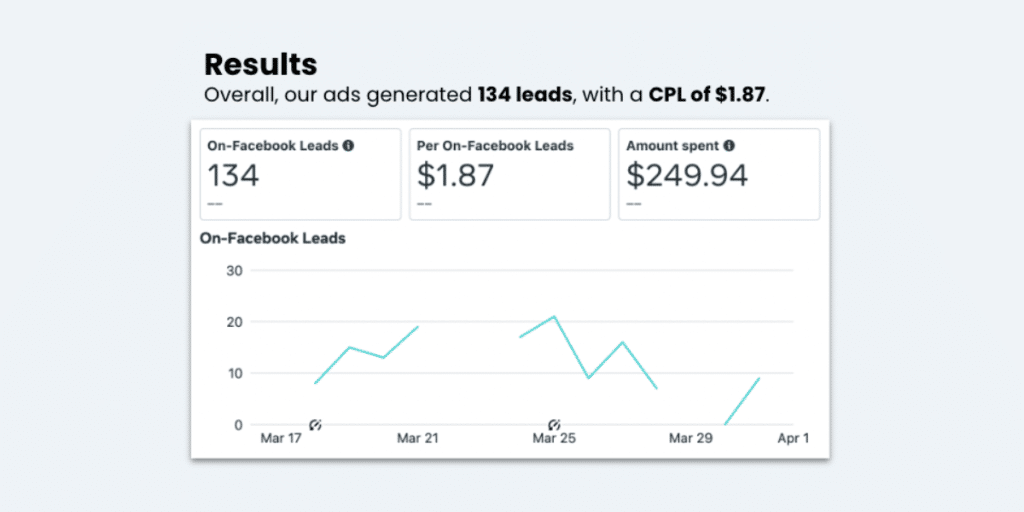
The campaign launched in March 2025 and in less than two weeks, the ads landed 134 new subscribers with a $250 budget, amounting to less than $2 per new subscriber, or cost-per-lead — well below Indiegraf’s target of $1 to $4 based on results from publishers in the network.
The magazine has now doubled its budget for a second set of lead-generation ads. The goal is to grow the magazine’s subscriber base as much as possible in the lead up to an end-of-year reader revenue campaign, boosted with support from NewsMatch.
NewsMatch is a funding stream eligible to members of the Institute for Nonprofit News which unlocks matching funds for end-of-year campaigns.
While working with Indiegraf is still early days, McCartney says she is pleased with their work so far.
“At this point, we are just beginning our relationship with Indiegraf,” McCartney says, adding she is hopeful this next set of ads will perform just as well, if not better. “They are doing a great job, we love working with them.”
Why Lead Ads?
Journalists can be skeptical of using social media advertising to grow their audiences for a variety of reasons such as the absence of fact-checking and algorithms that favour divisive opinions. But Meta lead ads remain a cost-effective way to grow subscribers, explains Noriega.
Meta’s algorithms can optimize even small budgets by automatically selecting the best-performing ads out of a set, empowering Indiegraf’s audience revenue experts to test different messaging.
From McCartney’s perspective, social media can be a good place to find information if consumers are discerning. “If we can focus on independent journalism and public media… essentially independent news — that’s where we will find the truth.”
“If we don’t all come together and try to do this in a very solution-based way, in a positive uplifting way, as opposed to perpetuating misinformation and disinformation that is all over social and mass media — we won’t have a home and none of the other issues matter.”
How Did Indiegraf Experts Develop the Lead Generation Campaign?
To develop the draft ads, Noriega worked with the managing editor Tori O’Campo to learn about what the publication offers its readership and review some of the top-performing stories based on its website analytics.
“My favorite strategy for identifying stories for lead gen is a combination of two things: editorial insight and data,” Noriega explains.
They worked together to develop a handful of general messaging ads which promoted Red Canary Magazine as an alternative to mainstream news outlets. While these general messaging ads did drive some awareness, they were proving expensive so the ads were stopped.
“If you’re trying to get leads, you really want to pick a story that you think people are going to respond to. You want to pick a story that you think people are going to like and have a conversation about in the comments,” Noriega says.
What Made the Lead Ad Campaign So Successful?
The most successful ad promoted an in-depth story about California’s Tulare Lake, an ancient lake that resurged and became a mainstream media sensation.
The story centres on overlooked perspectives from the Indigenous Tachi Yokut on the impact of Pa’ashi, which translates to “the life-giving lake.”
“I think the Tulare Lake ad did really well because of the state of the country,” Noriega says. “It’s an ad about an Indigenous community on the lake, and the lake has a history behind it… which is under attack now. Plus, it’s just a really good story.”

The second most successful ad read: “The flooding of Tulare Lake marks a dramatic return of what was once the largest freshwater lake west of the Mississippi.
“This environmental crisis highlights more than just issues of water management — it examines the history of the land’s original inhabitants. Read about the resilience of the land and its people in this award-winning Red Canary Magazine exclusive.”
The Indiegraf Experts team also created a lookalike audience, which matches the behaviours and characteristics of the magazine’s existing newsletter subscribers with one per cent of the total population. This helps to ensure that ads are reaching people who actually want to engage with the newsletter.
What’s Next?
“Now it’s just time to scale,” Noriega says. The next lead generation campaign is in the works and will promote other similar stories, plus some new ones that will be tested to see how they resonate with the lookalike audience.
“We’re testing some other award-winning stories with different tones and themes,” Noriega explains. The ads are set to run for about three weeks and the results will inform the December audience fundraising campaign.
“These subscribers also are going to be primed with a welcome series as they join the magazine,” Noriega says. “So hopefully when they get familiar with the stories, they get excited, and then once they see that NewsMatch campaign — calls-to-actions everywhere, emails, pop-ups, all that stuff — they get excited to want to financially support the publication.”
As McCartney put it: “Indiegraf is helping to boost our chances with NewsMatch,” which she said, “is a growing piece of the revenue puzzle with all the current cuts in funding. We are grateful and completely align with NewsMatch’s goal to generate a surge of collective support for truth-seeking independent journalism, post-election, to help cut through all the disinformation and misinformation cluttering news channels.”

Red Canary Magazine is a nonprofit, independent media organization dedicated to reporting on environmental, sustainability and social justice issues. You can support their work here.
Indiegraf has helped over 120 publications across North America start, grow and manage an independent news business. Interested in joining Indiegraf’s growing network? We are happy to answer any questions.


