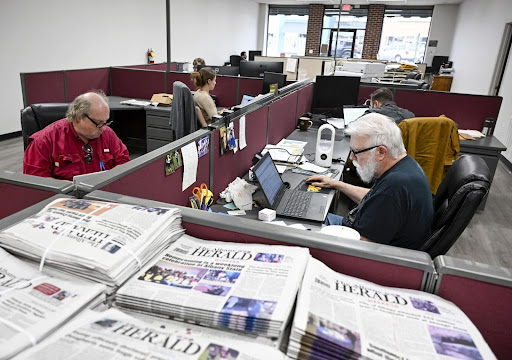
Many of the 19 small newspapers in rural Georgia that have joined the National Trust for Local News are what Rodney Gibbs describes as “proverbial one-man bands.”
Most newsrooms have one, two or three people, says Gibbs, who heads audience and product at the National Trust for Local News.
“They don’t have a product person, they don’t have an engineer, they don’t have a data nerd, they don’t have a newsletter editor.”
But a partnership with Indiegraf is slowly changing that, combining the strengths of traditional print journalists with Indiegraf’s suite of online publishing tools, such as content and payment management systems, subscription paywalls and a skilled team of digital news strategists.
“They’re all small, but collectively, it’s almost 20 publications. And so by working with a shared platform like Indiegraf, that has shared resources and support and training, suddenly we’re not one or two people — we’re 50 people.”

The National Trust for Local News is a non-profit founded in 2021 to save the critical information infrastructure provided by rural newspapers in Georgia, Colorado and Maine by gathering them into networks and bringing them into the digital age.
The Georgia Trust for Local News’s partnership with Indiegraf has already proven the benefits of sharing resources, engaging new audiences online and slowly building the foundation for new sources of revenue, says Gibbs.
Beyond bringing these print operations online, they’ve even successfully launched an entirely new digital news outlet, the Macon Melody, serving the small community of Macon, Georgia.
“Indiegraf was selected because of all the work they’ve done with similar publishers around Canada and North America,” he says. “[Indiegraf co-founders] Erin and Caitlin in particular really stood out to the people at the National Trust because we were looking for, and continue to look for, actual partners. We’re not looking for a vendor.”
“What Indiegraf promised, and they have delivered over and over again, is true partnership, where the technology and software they provide is really perfect for what we need.”
Since the partnership first formed in 2024, one in 10 Georgians now have access to a local news source that meets them where they are at: on mobile phones.
Bringing rural outlets online
Bringing a network of rural outlets online required an enormous amount of skill and patience, Gibbs explains. “The tenacity and the perseverance of Caitlin and her team is remarkable.”
The many months-long content migrations involved a series of technical challenges related to tagging, taxonomy and other challenges.
Opening these outlets up to new business models has also required significant cultural change.
These are in some cases one-hundred-year-old newspapers with a printing press and a storefront where people come in and want to pay by cheque for their paper, Gibbs says.
Within the newsrooms, a handful of journalists do it all. “But at the same time, there still is, in those communities… a demand for digital information,” he says.
Through training and support, “the one-man band in Fort Valley, Georgia, can start to understand how to develop a newsletter and build an audience that way,” Gibbs explains.
“So finding good partners, finding good products that are easy to use — that are supported, well documented, that have videos and support sites — has been crucial,” he adds.
“And through the Indiegraf platform itself, through Slack, through face-to-face work, we’re training and sharing best practices. It’s really helpful.”
Read more: Energeticcity triples number of supporters after switch to Indiegraf
Finding new audiences
Beyond bringing news products online, Indiegraf is also helping lay the foundation for benchmark metrics to measure results as the team works to grow audiences.
“[We’re] building that top of funnel, building the audience both through on-site traffic, through newsletter signups, through other touch points — because that has not been part of the DNA for most of these publications.”
This involves educating both staff and their readers about the benefits and importance of audience revenue models to sustainably fund the local news they rely on.
Some end-of-year campaigns to grow subscribers and bring in audience revenue have already paid off.
In Dublin, Georgia — population 16,000 — Indiegraf helped launch The Courier Herald’s new website and newsletter from scratch. In just four months, the outlet had 2,000 newsletter subscribers.
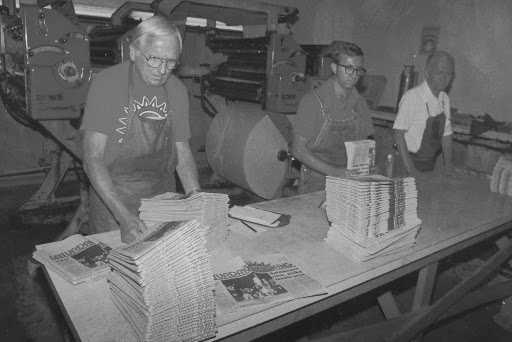
The website went from hosting a downloadable PDF of each print edition to bringing in organic traffic.
“Within the first month or so, we pulled up their analytics … and they had 80% of their traffic coming from mobile phones,” Gibbs says.
With a new online presence and investments from the parent organization National Trust for Local News, the Dublin Courier Herald brought crucial information to the people who needed it most, when they needed it most.
Hurricane Helene hit Dublin in September 2024 along with a surge of misinformation, writes DuBose Porter, executive director of the Georgia Trust for Local News, in an op-ed for Editor and Publisher.
“During a disaster, I think of our newspaper as a kind of civic infrastructure, delivering critical public information to the community that we serve. But with Helene, our role as trusted truth-tellers became just as important.”
After migrating 200,000 news stories alongside subscribers and ads, Albany Herald’s new online presence saw a 100-person uptick in paid subscribers over the holidays without any advertising, Gibbs says.
People were simply finding the new, mobile-optimized website, seeing news stories of value and organically signing up to receive newsletters.
“It’s very auspicious in my mind about the future and the potential.”
Launching new digital-first publications
In June 2024, Indiegraf and Georgia News Trust launched an entirely new publication, the Macon Melody.
As a brand-new outlet, the first priority was growing an audience. But the team decided to ask for donations in a small campaign, dubbed Champions of the Melody, to help educate new readers on the reader-funded business model.
“Without promotions or anything, we raised about $20,000 that way,” he says, through a combination of small donations up to $100, $500 and even $1,000.
They are now testing it as a first step toward building a comprehensive donor campaign program.
“What really won us over or impressed us with Indiegraf and the Melody launch was that Indiegraf, more than once, has saved us from ourselves.”
“We’ve had times where [we suggest] not such a good idea and they would say, ‘You know, you could do that. But let’s pause for a second. What are you really trying to do? What’s your objective?’”
“And they would leverage their knowledge, both from other publishers they’d work with and just the direct work they’d done, and often said, ‘You know, we think you’re going to regret that down the road.’”
“They’re not ‘Yes’ people. They’re not afraid to push back. And we appreciate that. We need that.”
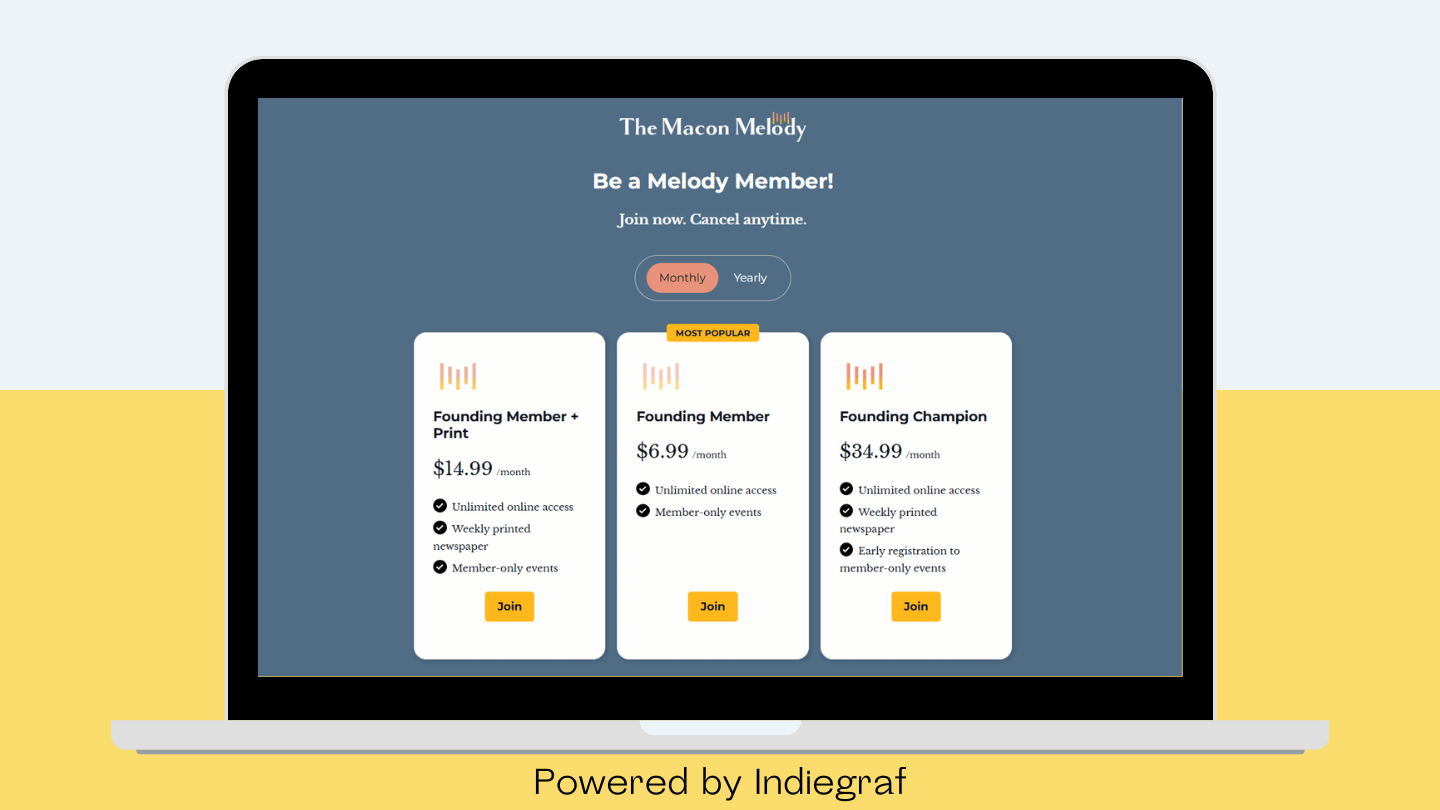
The early success of the Macon Melody points to the benefits of a membership model, he says. “Both for the belonging and the events… but also to make space for people who might want to give above and beyond what it costs to get past the paywall.”
“And so Indiegraf has really been this primary tool for that, but also connective tissue,” Gibbs says. “When we’ve learned a lesson in one publication, then we can replicate it across the other 18 pretty readily.”
“I feel like I’m on the payroll of Indiegraf. I’m not. They’ve earned my love and respect.”