




Thank you! Your submission has been received!
Oops! Something went wrong while submitting the form.



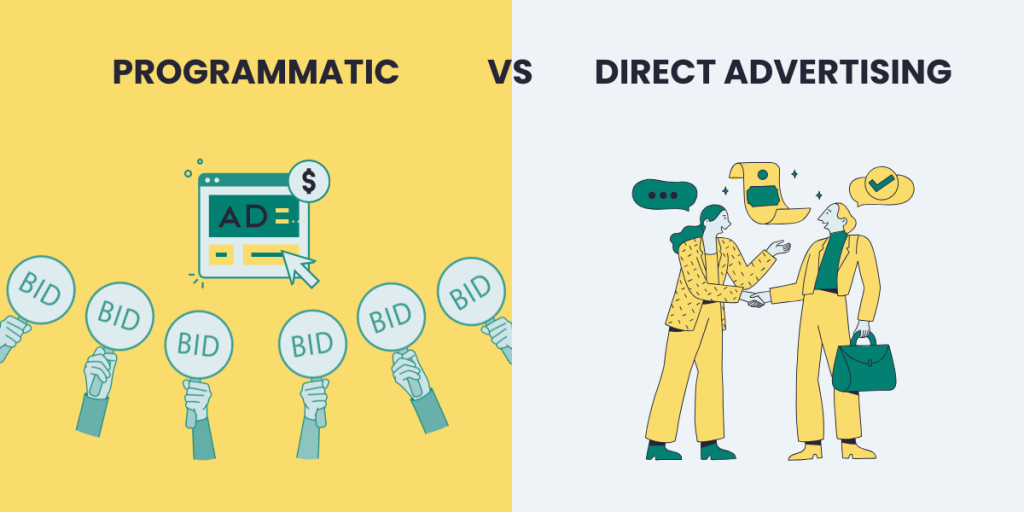
Direct sale display ads are when the advertiser works directly with a publisher to purchase ad space on a specific website. Compared to programmatic ads, direct ads are associated with higher CPMs because the advertiser has more control over where their ads are placed and the audience they are targeting. The drawback is that direct ad buying can take more time and costs more than programmatic.
To tap into the benefits of a direct ads strategy, a publisher must have a deep understanding of their audience. In the initial outreach to prospective advertisers, you’ll be expected to come equipped with a thorough understanding of who your readers are, and how they are interacting with the content you want to sell advertisements on.
While many publisher's current or future business models are reliant on advertising, there’s a natural tension in that most readers either ignore or outright avoid ads. A direct ads strategy has the opportunity to remedy this concern if you take advantage of your ability to offer highly personalized ads for your readers.
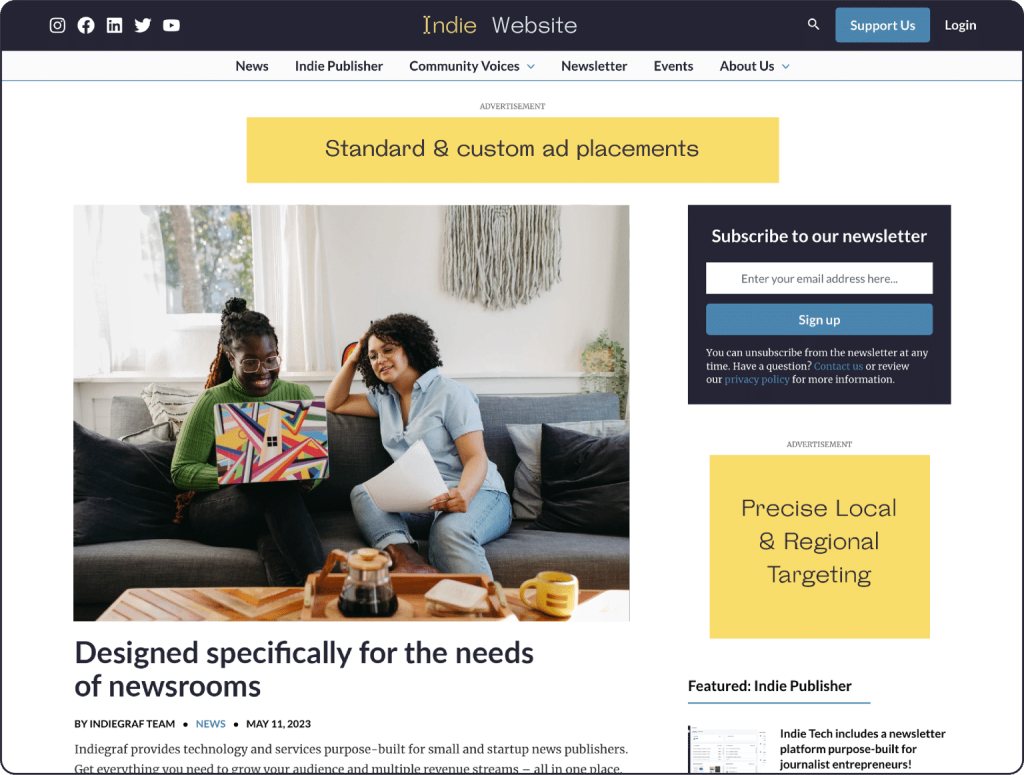
Elevate your advertising strategy with Indie Ads Manager
Sell display ads directly on your site without relying on platforms like Google Ads. Indie Ads Manager simplifies the process, giving you full control over your ad placements and allowing you to connect with advertisers who align with your audience.
In simple terms, an analytics tool is software that is used to collect and track user data. These tools collect information on who your readers are and how they are engaging with your site. This makes it an essential resource to help you know your audience better.
Once the analytics tool is set up to collect the data that you want, it will run in the background automatically and will help you better understand your publication’s readership over time.
For example, publications focusing on a specific topic such as video games may be surprised to find that the average age of their users is higher than they expected. Or a publication covering news in a specific state may be able to quickly learn how their readership is further split between different cities and towns.
📖Read more: “The importance of collecting first-party data for publishers”
When selecting the right analytics tool for your publication, there are a few key aspects to consider:
The most popular analytics tool on the market is Google Analytics. It includes several features for publishers looking to take the first steps in better tracking and understanding reader data across a publication.
Indie Website is designed to seamlessly integrate with Google Analytics. Our team will set up your publication’s Google Analytics account for you and ensure it’s running properly.
For more tech-savvy users, a product like Adobe Analytics will offer far more advanced and customizable data collection techniques. But it costs more and is a bit more difficult to set up and use.
While services like Google Analytics and Adobe Analytics offer you a variety of ways to secure and protect your reader's data, for certain publishers and audience types, an open-source, privacy-focused analytics tool like Matomo may be a preferred alternative.
Once you start collecting basic user data, you may notice tools will capture not only the demographic data of readers but also how exactly those readers are interacting with content on the site.
Key user behavior data collected by analytics tools might include:
A strong understanding of user behavior can allow you to charge a higher rate if you can show that your content resonates with a potential advertiser’s target demographic.
For example, a potential advertiser is looking to reach women in their thirties. If you can demonstrate that women in their thirties are particularly engaged with your content in the morning using analytics, that’s a strong case for securing a deal that prioritizes that advertiser’s placement on the content you are publishing in the morning.
DON’T MISS OUT: How to develop sponsor-centric messaging. An Indiegraf Experts guide.
User behavior will also be an important tool for understanding how advertising is impacting the overall user experience. As you begin to implement and incorporate new advertising placements on your site, user data will help you course correct if a certain placement is causing users to disengage with content, or it may let you know you are on the right track if a particular placement is leading to high conversions.
Many social media platforms offer their own version of analytic tools directly in the tool that allows you to track and understand key information about your following.
For example, YouTube analytics will provide additional insight into viewer behavior that can help determine the most effective point in a video to embed an advertisement.
Social analytics will help you better understand not just how your audience is interacting with your publication on social media but also the other brands and key influencers they are resonating with or being targeted by.
Combining insights from your social analytics tools with direct research will help you easily see the brands and companies already investing in trying to reach your readership.
Looking for ad solutions? Watch our on-demand webinar, 'How to Get Started Selling Your First Ads,' and explore strategies to enhance your revenue.
Given the different sources of data you can pull from, you may be wondering if investing both time and effort into each of them is worth it. After all, if your analytics tool is telling you key information about your readers, won't your social analytics tools say more or less the same?
The truth is you may be missing out on key insights and opportunities if you opt to rely on only one data source. A 2022 study in the Journal of Consumer Research confirmed the importance of diversifying the sources of data you are pulling from when trying to paint an accurate picture of an audience's purchasing and engagement behavior.
Some key benefits of diversifying your data collection include:
Collecting data from a variety of platforms can give you a more accurate idea of your overall audience, while also allowing publishers to drill down into their specific amplification channels. If you offer website ads, newsletter ads, and promoted content/social posts, you could end up with different prospective advertisers depending on the platform.
An effective audience survey will help you better understand details about your audience that are not easily understood from the analytic tools alone.
For example, an analytics tool may tell you that a number of your readers are in their late teens or early 20s. Whereas a survey of that demographic may inform you what percentage of those readers are students versus working full time.
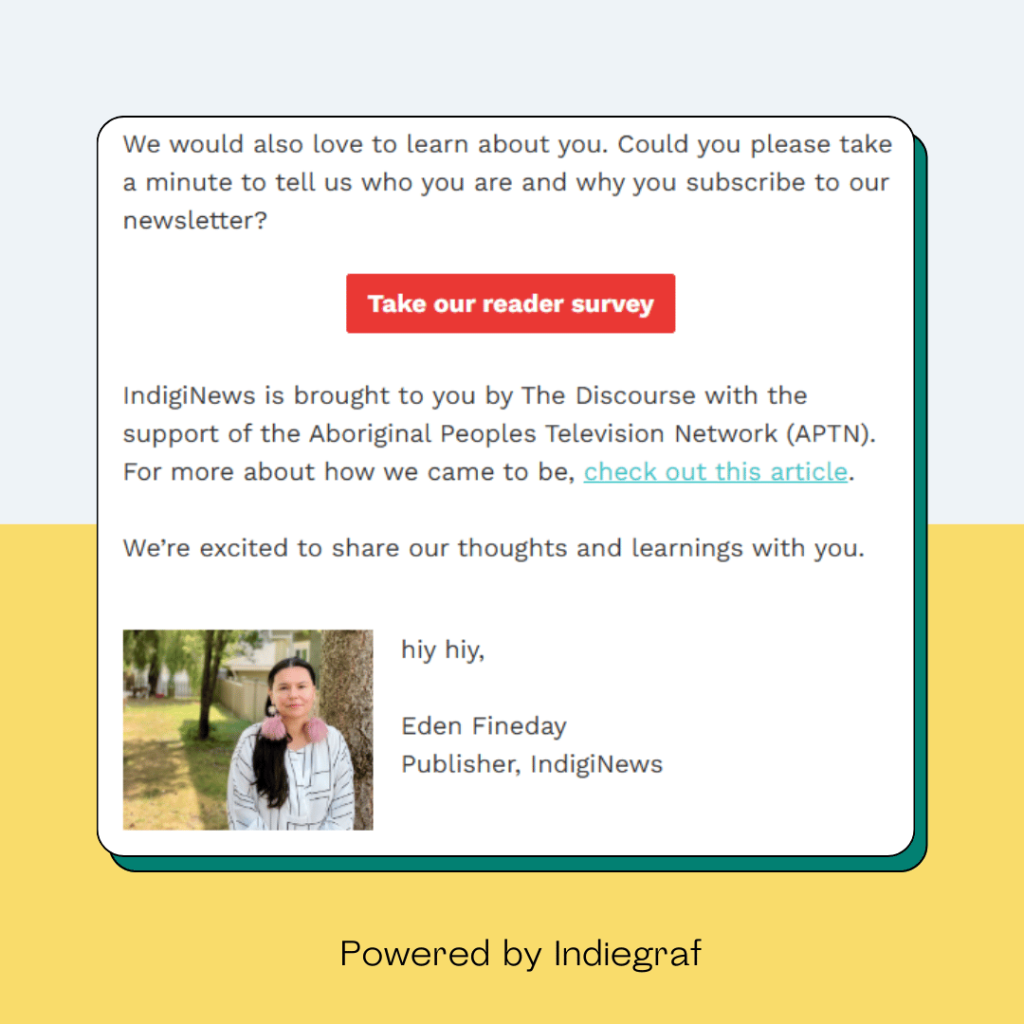
Surveys are also a way to assess the overall effectiveness of an advertising strategy. While advertising partners will be interested in high conversion rates on their ads, another sign of successful placement is an increase in overall brand awareness over time.
Prior to placing ads for a new advertising partner, you may ask your readers if they have any awareness of your partner's brand. You can use this data to demonstrate the effectiveness of your advertising strategy even if direct conversions are low.
📌 Audience insights are critical, but ad success depends on more—see how it all connects in our website and newsletter ads guide.
We understand that news entrepreneurship can feel challenging, but you are not alone!
Book a free chat with us to share your challenges, and we will provide tailored insights on how Indiegraf's technology and services can help you overcome them. Whether you're looking to engage your readers for the first time or seeking to enhance existing support, we’ll guide you through proven strategies to convert your audience into sustaining financial contributors.

Indiegraf is the operating system for independent local media.