Introduction to AI and SEO for Publishers
The rise of AI-powered search has transformed the digital landscape for publishers. While AI overviews and zero-click search results present real challenges, search remains an incredibly valuable channel. Billions of searches happen daily, and there’s still substantial opportunity for publishers who provide useful, high-quality information. While AI can answer simple queries, it cannot replace the depth, originality, and human perspective that strong journalism provides.
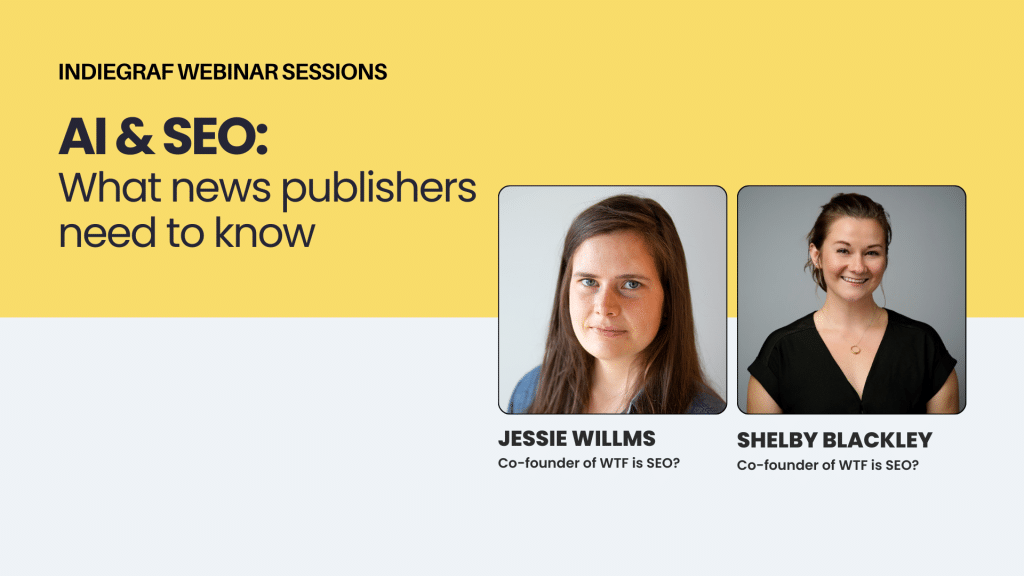
In the Indiegraf webinar, “AI and SEO: What News Publishers Need to Know Right Now,” Shelby Blackley and Jessie Willms, co-founders of newsletter WTF is SEO?, explore how AI is reshaping search, what still matters, and what actions publishers can take right now.
One of the main takeaways? The challenge lies in focusing on what we can control. Rather than dwelling on the existential threat of AI, publishers need to ask: What should we prioritize right now? How do we position ourselves to succeed both in the immediate term and over the long haul?
The key is balancing short-term optimization with long-term strategy. Here are five essential approaches for publishers navigating the AI search era.
1. Diversify Your Traffic and Revenue Sources
Building sustainable success means developing multiple pathways to reach your audience and generate revenue. While search should remain a priority as long as it drives traffic, publishers need to think strategically about reducing dependence on any single channel. This diversification protects your business from algorithm changes and platform shifts while opening new opportunities for audience engagement and monetization.
“One thing that we can do, both within the context of SEO, as well as more broadly on- and off-platform, is think about the relationship that we can build between our authors and our readers,” says Willms. “That direct relationship is sticky and will bring people back to your site and your content.”
It’s also important to be looking at non-Google ways of reaching readers, so things like social, newsletters, and internal referral traffic (recirculation). As soon as you have someone on your site, you need to ensure that you’re providing a great user experience that makes them want to stay, and that you’re giving them access to additional pieces of content that they might want to engage with.
2. Invest in an Authorship Strategy
In 2025, audiences trust people more than brands. Your journalists, columnists, and subject matter experts are your competitive advantage against AI-generated content. There’s a fundamental difference between an AI overview and something written by a real person with a name, face, and proven track record of expertise.
Google evaluates content using E-E-A-T (Experience, Expertise, Authoritativeness, and Trustworthiness), and strong authorship signals directly support these criteria. Trust and expertise form the cornerstones of brand authority, and readers increasingly care about the real humans behind the journalism they consume.
Effective authorship requires both on-site and off-site efforts. Here are a few examples:
On-site elements:
- Clear, prominent bylines
- Detailed author bio pages
- Links to credentials and previous work
- Consistent linking to author pages throughout your site
Off-site strategies:
- Podcast and media appearances
- Strong social media profiles linking back to author pages
- Building a robust backlink profile
- Engaging with audiences through AMAs (Ask Me Anything sessions)
This holistic approach builds one-to-one relationships with readers while helping Google understand why specific authors have the expertise to cover particular topics.
Read more: What Makes a Good SEO Headline for News Sites?
3. Research Alternative Audience Channels
Publishers need to meet audiences where they spend their time, not just where they used to be.
Reddit has become one of the most visible non-publisher sites in search results and top stories. The platform is increasingly working with publisher partners, and user-generated content naturally aligns with what people are searching for. Reddit’s text-based format also plays to publishers’ existing strengths, requiring less production effort than video content. AMAs on Reddit provide excellent opportunities for audience engagement and content idea generation.
Newsletters
Newsletters consistently emerge as a success story when publishers discuss declining Google traffic. They require moderate effort, benefit from excellent platform tools, and create valuable habits and parasocial connections with audiences. A newsletter arriving daily or weekly transforms passive readers into active seekers of your content.
YouTube
YouTube and video represent a higher-effort investment but reflect how many people prefer to consume content. If you already produce podcasts, recording video versions offers a natural entry point for testing the platform.
3. Build and Leverage Your Brand Authority
Focus less on “traffic grabbers” and more on what your publication does exceptionally well. Google’s query systems pull from everywhere, using Knowledge Graphs, linking patterns, and E-E-A-T signals to evaluate sources.
How your brand is perceived online directly influences whether readers choose your content over AI summaries. Topic authority depends on how notable your source is, how original your reporting is, and your overall reputation.
Excellence in specific topics forms the foundation of brand authority. You don’t need to cover everything; you need to be known for being really, really good at covering particular topics.
5. Move Beyond Easy Content to Unique Value
In AI search, simple informational queries get answered instantly. Questions like “What is X?” or “What time is Y?” are easily handled by AI overviews. This means publishers must shift focus to what AI cannot replicate: insights, perspectives, and information people can’t get elsewhere.
Your competitive advantage lies in:
- Deep subject matter coverage that goes beyond surface-level answers
- Original reporting with unique data
- Human perspectives, commentary, and opinion
- Community access and engagement
- Interactive tools, calculators, and templates
- Personal experiences and expertise
Register below to get access to the full webinar and slide deck with extra resources.