What’s an audience funnel — and why is it important for publishers to understand? In this webinar recap, the Indiegraf Experts team breaks down the audience funnel framework and shares actionable strategies to guide your readers through every stage — from first click to loyal supporter.
Senior Manager of Expert Services Elvin Noriega and Audience Strategist Wendy Lopez lead this insightful session, designed to help community news publishers turn casual readers into recurring, engaged supporters.
“The goal of an audience funnel is really to help you reach your goals more efficiently,” says Noriega. “By the end of this webinar, you’ll be able to identify where a reader falls in the funnel, spot gaps in their experience, and leverage this information in marketing strategies and for potential advertisers.”

What is a target audience?
An audience is anyone who interacts with your product or service. For community news businesses with a specific mission, focusing on a target audience is crucial for maximizing impact. A target audience is a narrowed, more specific group based on your goals. Someone who your news or content business solves a problem for.
Identifying your target audience helps tailor editorial and advertising strategies to connect with those who have an interest in or need for your work.
What is an audience funnel?
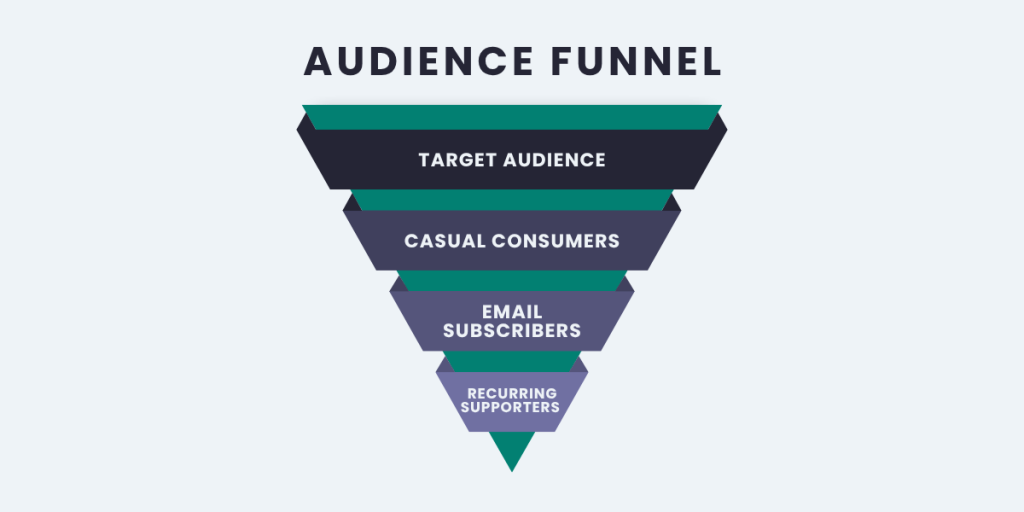
An audience funnel visualizes the audience’s journey from initial awareness to taking action, such as subscribing or becoming a financial supporter for news publications. The main goal is to guide the audience to purchase the offered products, like news stories and newsletters, through different stages of the funnel.
At a high level, these stages can be categorized into the top, middle, and bottom of the funnel. As the audience moves through the funnel, it gets smaller because the conversion stage focuses only on those taking action.
Why is it important to understand the audience funnel?
“A big reason why it’s important to learn about the funnel is to help you optimize your strategy,” says Lopez. “You want to know who it is you’re talking to when you run marketing campaigns, so you can be more efficient.”
Understanding where a reader is in the audience funnel is crucial for tailoring communication and marketing campaigns. New readers of the publication need different engagement strategies than loyal readers who have been with us for years.
Knowing the audience’s position in the funnel also benefits publishers exploring advertising as a revenue stream. A well-developed bottom of the funnel, consisting of an audience likely to take action or make a purchase, is attractive to potential advertisers and can strengthen pricing and negotiation power.
Read more: “Know Your Audience: A Strategy for Direct Advertising Success”
Exploring the different stages of the audience funnel
Our Indiegraf Experts suggest that publishers use a four-stage audience funnel. The stages are target audience, casual consumers, email subscribers, and recurring supporters. This model visualizes how a new audience member interacts with a news publication and progresses through the stages.
Stage 1: Time to educate your target audience
This is where your target audience is. It includes current and potential readers and supporters that the publication aims to reach and serve. They may be defined broadly (e.g., the general population of a state) or by demographics like age or interests.
Key characteristics of this stage are that audience members usually know little about the publication. They do not follow it on social media or subscribe to its newsletter. They may also not recognize its branding. However, from the publication’s perspective, this is the group whose problems the business is solving.
Test strategies such as lead generation on Meta, sharing campaigns, and hosting events to increase awareness and engagement at this stage.
Read this success story: Red Canary Magazine reaches new readers with Meta Lead Ads
Stage 2: Casual consumers on the fence
Next, readers move to the “casual consumers” stage of the audience funnel. These individuals visit the website and read content, occasionally interacting on social media.
They are getting used to reading the publication and may know the brand. However, they have not subscribed or given money yet.
The main challenge now is to re-engage them. We want to encourage them to become loyal subscribers or supporters. We should focus less on educating them about the organization.
The casual consumer stage of the audience funnel can be assessed by tracking monthly website visitors.
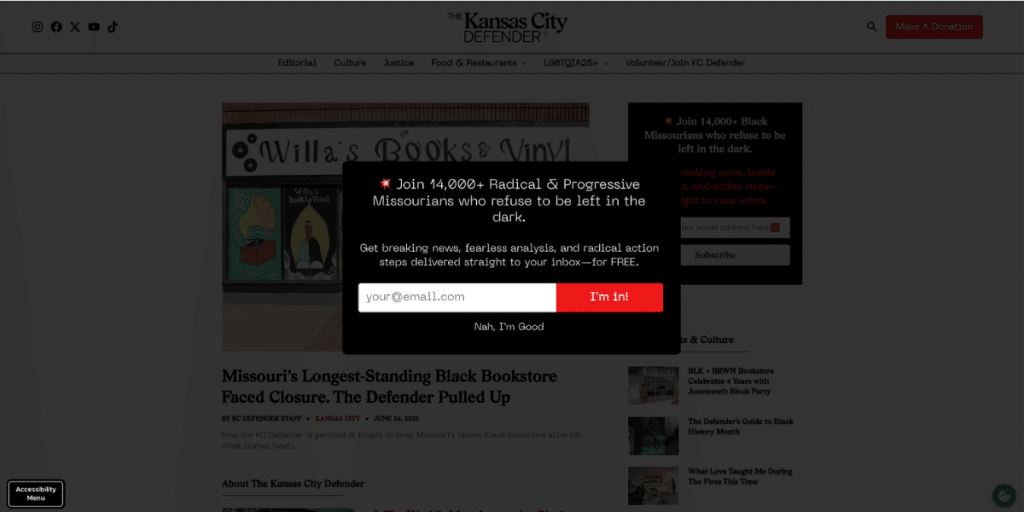
A key organic strategy to move individuals in this stage towards becoming subscribers is to simplify the subscription process. Think about how easy it is to sign up for newsletters: look at the newsletter callouts and consider if the steps needed are reasonable for the reader.
Remember: Make it easy for them to become a subscriber.
Stage 3: Loyal and interested email subscribers
The next stage of the audience funnel focuses on email subscribers. These individuals have actively signed up and want to receive news, offering opportunities for direct engagement and interaction.
No single strategy ensures more conversions. However, this stage is important for testing and experimenting. It helps us understand what encourages subscribers to reach the next stage, which is financial support. This knowledge can also guide strategies for other parts of the funnel.
Tactics like surveys, A/B testing on headlines and subject lines, and call-to-action testing can provide valuable insights.
You can learn a lot at this stage — take it as an opportunity to test and learn.

Stage 4: Financial support from recurring supporters
Once an email subscriber financially contributes, they become a supporter, indicating their belief in your work. Leverage this support by testing email strategies and continuously nurturing engagement.
Consider how to keep these contributors involved by sharing behind-the-scenes stories, communicating the impact of their contributions (e.g., recent hires), and learning how their engagement can move other readers through the funnel.
Collecting reader feedback through surveys is highly recommended to understand their needs directly. Ask about coverage gaps, areas for improvement, and competing news publications they subscribe to (paid or unpaid).
To make donors feel special, share exclusive behind-the-scenes news like a Q&A with reporters or access to exclusive merch.
Checking on your churned supporters
Churn refers to readers leaving or stopping financial support. Understanding their reasons for leaving is crucial to prevent future churn and improve the product.
Make a plan to reach out to readers who have unsubscribed. They may have left by mistake or felt there was not enough communication.
We suggest looking into technical reasons for churn. This includes expired credit cards or address changes. Follow up with these customers to try to win them back.
If you didn’t catch the live session, the replay is still available — and well worth your time. Whether you’re an individual content creator, or part of a large publishing group, understanding and optimizing your audience funnel is crucial for sustainable growth and financial success.