Determining the price of advertising can be one of the trickiest aspects of running a newsletter or website. But don’t worry — we’ve got some tips to help you navigate this process and set rates that reflect the value you’re offering to advertisers.
Whether you’re just starting out or looking to refine your pricing strategy, this guide will provide useful insights to help you establish competitive ad rates and maximize revenue.
Do Your Research: Know Your Competitors and Market
Before setting your ad rates, it’s crucial to understand the landscape. Start by researching similar publications in your area — this includes independent publications, networks, and larger media outlets. Here are a few ways to gather information:
Request Competitors’ Media Kits and Pricing
Don’t hesitate to ask competitors for their media kits and pricing. This can give you a baseline to work from and help you gauge where you stand in the market.
Subscribe to Newsletters
By subscribing to your competitors’ newsletters, you’ll get a firsthand look at their content and ad offerings. This will also help you understand their audience and how they position their ad space.
This research will help you better understand the value of your ad space, how to price it competitively, how to make your product stand out from competitors and identify product gaps.
READ MORE: Struggling to stay consistent with ad sales? This guide will help you develop a sales routine that delivers steady revenue.
Price Your Website and Newsletter Ads on a Flat Rate Basis (Instead of CPM)
When it comes to setting your ad rates, selling on a flat rate basis can be simpler and more effective, especially for smaller publishers. While calculating your rates based on CPM (cost per 1,000 impressions) can be helpful to use as a reference for ensuring your rates are competitive, we recommend opting for a flat rate. Here’s why:
- Easier to manage: Flat rates are straightforward and simple to manage. You don’t need to worry about hitting specific impression quotas or tracking impressions across multiple campaigns.
- Easier to predict revenue: With rates based on CPM, CPC (cost-per-click), CPA (cost-per-action), etc. your revenue will vary depending on how the ads perform. It can also be harder on advertisers with a small marketing budget because their invoice could be unpredictable. Invoices can be sent in advance with payment required before an ad runs, reducing the number of customers who back out on paying.
- Ideal for smaller publishers: As a smaller publisher, managing ad sales on a flat rate basis allows you to focus on value and quality, rather than complex calculations.
Don’t forget, your audience is valuable because you’re reaching a highly targeted and engaged group. Selling based on that value, rather than impressions, can be more rewarding for both you and your advertisers.

How to Set the Right Price for Your Ads
Our advice is: Start low, then increase rates as you grow.
When starting out, it’s wise to set your rates lower to attract early adopters and build a track record. Here’s a breakdown of how to think about your pricing:
- Newsletter Ad CPM: On average, newsletter CPMs range between $10-$30, depending on factors like ad placement and the publication’s coverage area. When determining how to price ads, for niche publications with a highly targeted audience, CPMs can even reach $50 or more.
- Building trust and value: Starting with lower rates allows you to build trust with your advertisers. By demonstrating the effectiveness of your ads, you’ll be in a stronger position to increase rates over time.
As your audience grows and your value becomes clearer, you can begin increasing your rates. Starting low allows you to attract more advertisers and encourage long-term partnerships.
Price Increases with Audience Growth
As your audience and publication grow, so too will your expenses. Make sure you are regularly increasing your sponsorship rates. Communicate price increases as early as possible and put together a tiered pricing plan that shows ad cost with audience growth. Consider grandfathering in early adopters for a limited amount of time, but always let them know that the price will go up at a specific date.
Don’t Underestimate the Potential of Ad Revenue
Ad revenue is the lifeblood of digital publications big and small. From the tiniest indie outlet to the New York Times, advertising is a solid way to monetize a website, a newsletter or even a podcast, and give publishers more time to focus on why the publication began in the first place.
Mark Talkington, founder and publisher of the Palm Springs Post understood just how tricky the ad business could be. “I knew how tough it was to sell ads,” he recalls. “I knew how tough it was to get people to pay for ads and I really wanted nothing to do with it.”
Today, around half of the Palm Spring’s Post revenue comes from advertising. While the growth in subscribers has slightly slowed, ending 2023 with 15,000 daily newsletter subscribers and 2024 with 17,420 subscribers, revenue from paying members and ads continues to shoot skyward, bringing in $154,000 gross in 2023 and $255,000 gross in 2024.
⚡ Read their success story: “From a One-Person Newsletter to Palm Springs’ Favorite News Site”

Organize Your Sales Assets
Once you’ve settled on your pricing structure, it’s time to create clear and professional sales materials. These documents will help potential advertisers quickly understand what you offer and how they can get involved. Some essential sales assets include:
Media Kit
What it is: Your media kit is the main source of information for potential sponsors, it’s basically a resume for your business. Include key information about your publication, such as your mission, audience demographics, and the types of ad placements you offer..
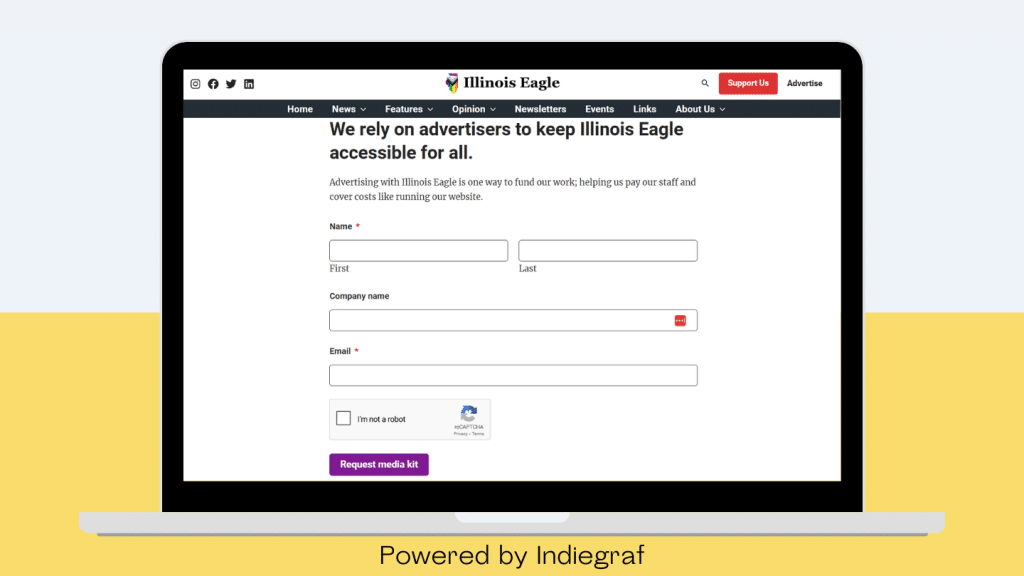
We highly advise having an easy-to-access sponsorship page on your website where potential advertisers can request your media kit. Many publishers in Indiegraf’s network use Indie Email to build automations that add interested advertisers to a separate email list and send them an email to download the media kit.
Sam Hoisington from The Bentonville Bulletin says, “Indie Email has a notes feature where I can jot down details from our conversations. It’s essentially a lightweight CRM for ad sales—no need for anything complicated.“
Rate Card
What it is: A clear breakdown of your prices for each ad placement. A simple 1-page rate card can accompany the media kit with outbound sponsorship inquiries, or it can be sent over to people who download your media kit from your website.
House Ads
What this is: Simple ad examples that demonstrate how ads will look in your publication.
You don’t need to make these assets overly complicated — Google Docs, PDFs, or a simple landing page can work just fine. The goal is to make it easy for potential advertisers to see the value you’re offering.
📌 Want to see how pricing fits into a complete ad strategy? Read our comprehensive guide to website and newsletter ads.
Review and Adjust Your Ad Pricing Regularly
Once you’ve set your pricing and started selling ads, it’s important to keep track of how your rates are performing. Here are some key things to consider when it comes to adjusting your prices:
- Update prices annually: Your rates should be updated once a year based on your growing audience size and engagement levels. Don’t be afraid to adjust your pricing to reflect the increasing value of your platform.
- Start small, then scale up: As you add new ad placements or options, it’s a good idea to start with a few options and gradually expand.
By starting small and scaling as demand grows, you can ensure your pricing strategy remains sustainable and effective.
Consider Seasonal Fluctuations and Advertiser Feedback When Pricing Ads
Your pricing strategy should be flexible enough to account for seasonal changes in demand. For example, during the summer, advertisers may be less interested in ad space (often referred to as the “summer slump”), while the end of the year could bring more demand as businesses ramp up their marketing efforts.
Holidays throughout the year can provide opportunities for higher value sponsorship campaigns, such as: underwritten content series on specific holidays, holiday events happening near you, and a local artist/product gift guide.
Here are two ways you can plan for seasonal changes in demand:
- Launch a sponsorship sale for the slowest summer months (mid-June – mid-August) earlier in the year. You can offer BOGO sales, a percentage discount, special rates for returning customers, etc.
- Have as much of your summer newsletter and display sponsorship sales wrapped up by the end of June as possible.
- Start selling inventory for peak holiday times early.
Additionally, don’t hesitate to seek feedback from your advertisers. They can provide valuable insights on whether your rates are fair and if your ad offerings are meeting their needs.
You may be interested in: An introduction to creating effective ads for your website and newsletter
Crafting a Thoughtful Pricing Strategy
Developing an ad pricing strategy takes time and thoughtful consideration. Your pricing should reflect both the size and engagement of your audience, and how well you’re serving the needs of your advertisers. Keep these tips in mind:
- Do your research to understand the competitive landscape.
- Sell on a flat rate rather than using complex CPM, CPC, or CPA models.
- Start low and increase rates as your audience grows and your value becomes more evident.
- Organize your sales information into easy-to-read documents.
- Review your pricing regularly and adjust as needed to stay competitive.
By approaching how you price ads with care and flexibility, you’ll be able to create a sustainable advertising strategy that benefits both you and your advertisers.

Elevate your advertising strategy with Indie Ads Manager
Our tech gives you full control over your ad placements allowing you to connect with advertisers who align with your audience.